

Delivery methodology
How we work when the product has to ship.
Agile habits without ceremony theater: short cycles, demos you can steer, risks written early, and a handoff your team can own.
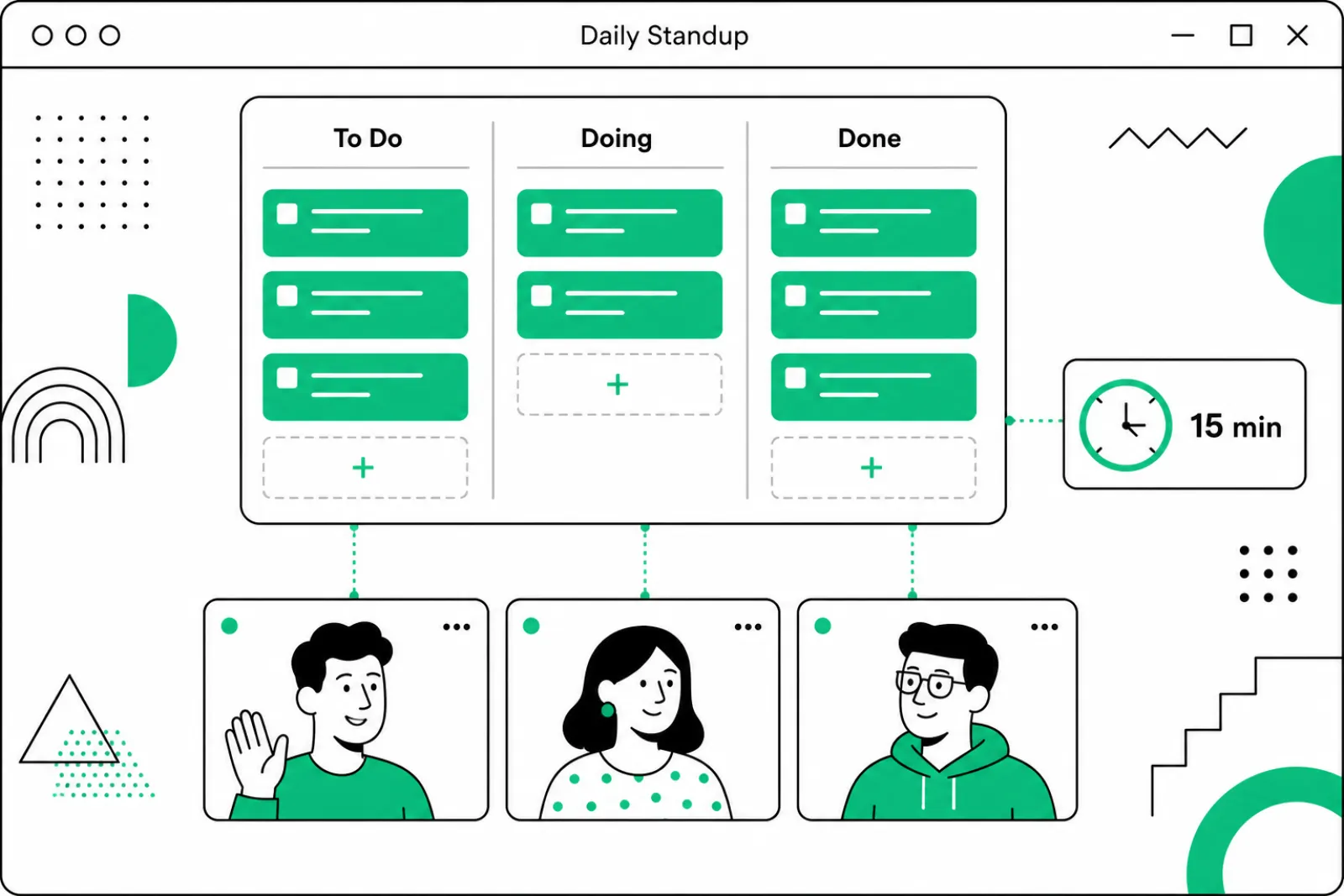
Visible collaboration
Boards, reviews, and demos—not status theater
You see the same working surface we do: backlog, PRs, and demo notes that survive the call when people or time zones change.
- 01Shared boardWork in progress is inspectable without waiting for a meeting.
- 02Written decisionsTrade-offs land in notes and tickets—not hallway memory.
- 03Demo cadenceYou steer against working software on a predictable rhythm.
Principles
Operating rules that keep delivery honest
Methodology only matters if it changes what you can inspect next week.
01
Decide in writing
Assumptions, trade-offs, and scope changes stay visible. Chat fades; decisions transfer when people change.
02
Ship reviewable increments
Prefer a thin operable slice over a long quiet build. Progress is something you can click, not a status slide.
03
Surface risk early
Integrations, compliance, and ownership gaps get named before they become launch week surprises.
04
Hand off cleanly
Release packs, runbooks, and clear owners so the next team can run and extend the system without us in the room.
Agile habits
Rituals that serve the product—not the calendar
Planning, standups, demos, and retros as operating habits. Ceremony without a reviewable increment is optional.
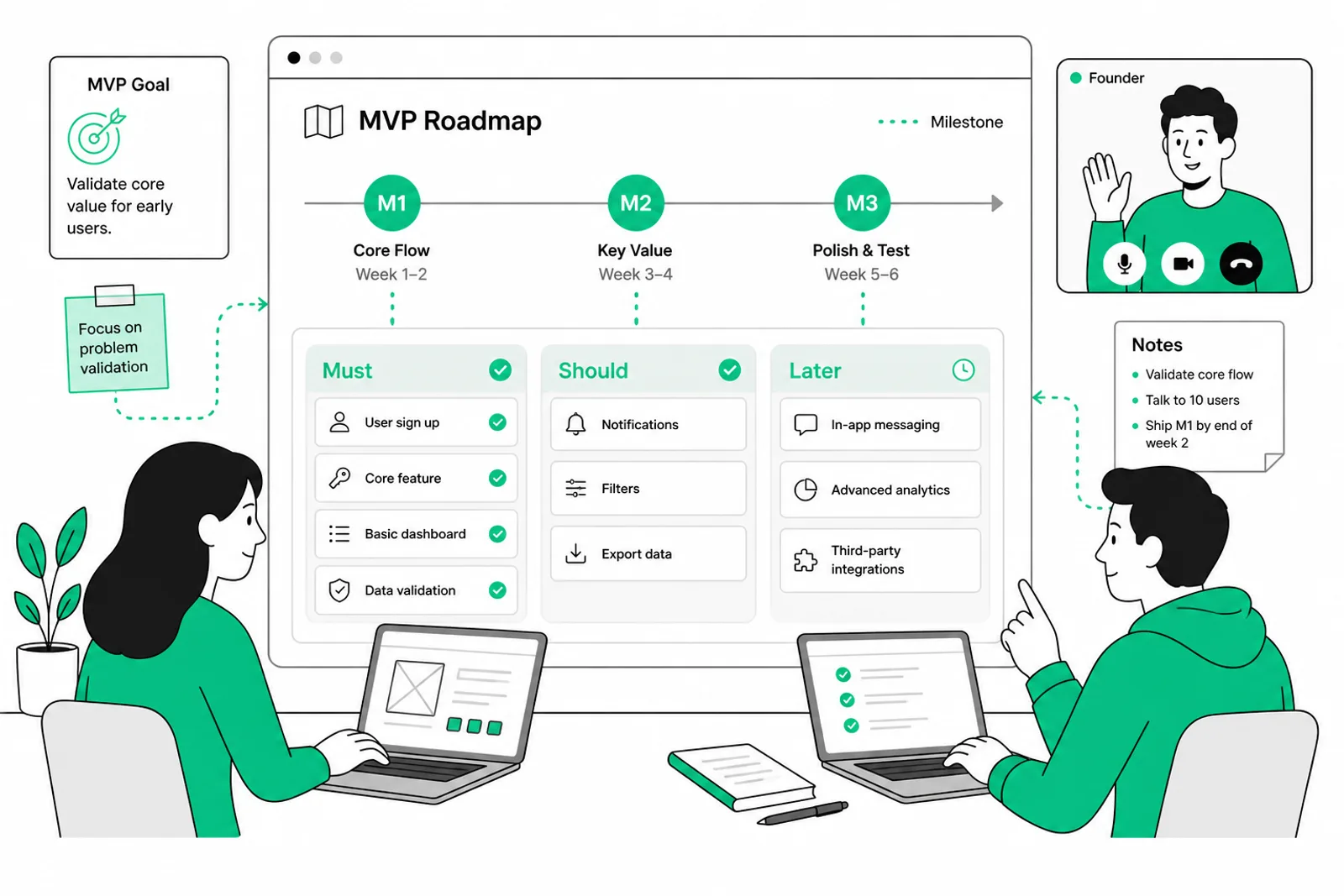
MVP roadmap & scope 01 · Planning
We lock the next slice: success signal, constraints, and what is explicitly deferred—so mid-cycle rebuilds stay rare.
Standups on a shared board 02 · Standups
Short syncs for blockers and decisions, not status theater. Async updates carry the rest when time zones require it.
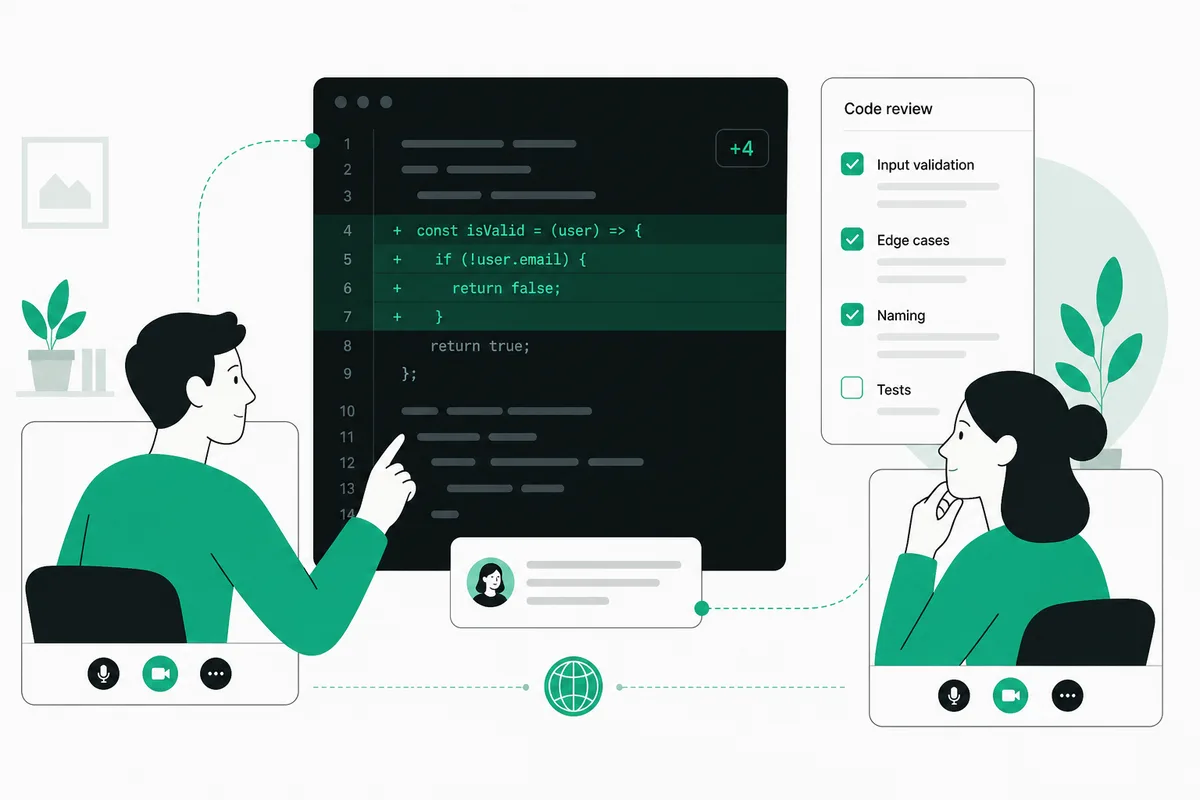
Code reviews on a shared PR 03 · Demos
You steer against working software. Feedback lands as written follow-ups, not hallway reinterpretation.
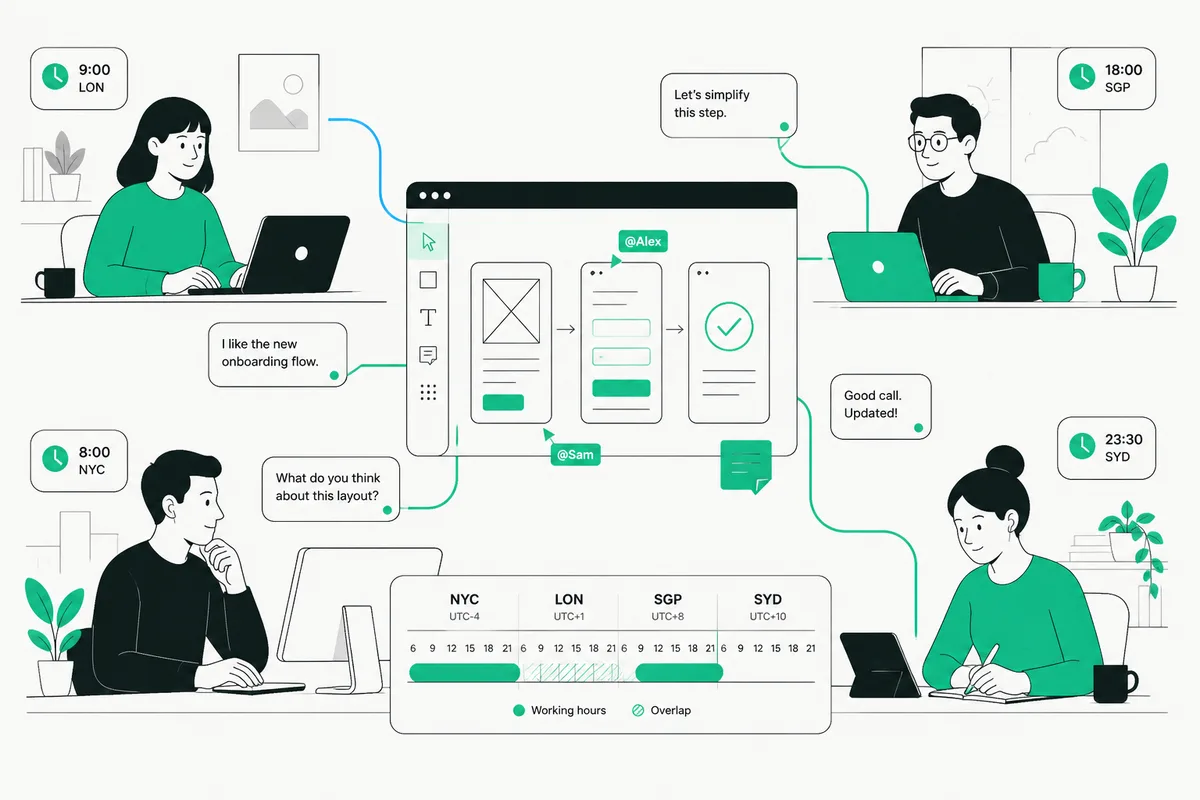
Timezone boards & async comments 04 · Retros
What slowed the last cycle gets named and fixed: process, access, or scope—not vague “communication” slides.
Delivery path
Four phases from idea to operable release
Watch the spine draw as you scroll—each station names the artifacts you can inspect before the next cycle starts.
Phase 01 · Discovery
Frame the problem
Map users, workflows, constraints, and the decisions that must be true before build begins.
You get · Discovery brief, success criteria, and risk list
- Problem brief
- Success criteria
- Risk & dependency list
- Engagement shape recommendation
Phase 02 · Design
Shape the product
Prototype the critical flows and settle architecture so implementation is not guessing.
You get · Wireframes or prototypes plus technical direction
- Critical-flow prototypes
- Architecture direction
- Scope: must / should / later
- Acceptance outlines
Phase 03 · Build
Build in the open
Ship in short cycles with demos you can steer. Scope changes stay explicit and written.
You get · Working increments, demo notes, and open decisions
- Working increments
- Demo notes & decisions
- Open PR / CI visibility
- Written scope changes
Phase 04 · Handoff
Hand off cleanly
Release with QA, monitoring, and a pack your team can operate and extend.
You get · Deployed release, runbooks, and support plan
- Deployed release (where agreed)
- Runbooks & environments
- Ownership map
- Support / warranty window
Collaboration stack
Tools we work in—yours first
We join your toolchain when it exists. When it does not, we stand up a shared surface in discovery and keep decisions written.
Boards
- Jira
- Linear
- Azure DevOps
- Your board
We join yours or stand up a shared board in discovery.
Code & CI
- GitHub
- GitLab
- Pull requests
- CI pipelines
Reviews and ship status stay visible to both sides.
Docs & design
- Notion
- Confluence
- Figma
- Shared briefs
Decisions live where the next owner can find them.
Comms
- Slack
- Teams
- Async updates
- Live demos
Overlap windows for demos; writing carries the rest.
Already have a board and a release date? Share the problem and constraints—we will map the delivery shape.
Book a scoping callEngagement fit
Same habits. Different ownership shapes.
Pick the model that matches decision rights—not the one with the loudest pitch.
Project delivery
We own a scoped outcome end to end—from discovery through operable handoff.
Compare modelsDedicated team
A pod that runs inside your cadence with clear ownership of a workstream.
Explore dedicated teamsStaff augmentation
Embedded seats that join your rituals, backlog, and standards—capacity without losing ownership.
Explore Hire Talent
Common questions
Questions about how we deliver
Agile habits, demos, tools, scope changes, and what handoff includes.
Do you follow Scrum or Kanban?
We use Agile habits that fit the engagement—sprint-shaped cycles for scoped projects, flow-friendly cadence when you already run a board. Ceremony is optional; reviewable increments are not.
How often will we see demos?
Expect regular demos on working software—often weekly or biweekly once build starts. Exact cadence is set in discovery against your decision windows and time zones.
Can you work inside our existing Agile process?
Yes. Hire Talent and dedicated pods embed into your standups, planning, and release rules. Project delivery keeps a clear shared cadence with written decisions either way.
Which tools do you use day to day?
We meet you where you already work—Jira, Linear, GitHub, GitLab, Notion, Confluence, Figma, Slack, or Teams. If you need a shared board stood up, we do that in discovery and keep decisions written.
How do scope changes work mid-engagement?
Changes are written: what moves in, what moves out, and what the new success signal is. We avoid silent scope creep that shows up only as a late invoice.
What do we get at handoff?
A deployed release where agreed, plus the pack to operate it—runbooks, environments, and ownership boundaries so your team is not dependent on tribal knowledge.
Still stuck on a specific constraint? Book a scoping call →
Related ways to engage
- Company
About SolveMotive
A product engineering studio based in Pakistan that helps founders and teams turn a clear motive into software, AI, and capacity they can own.
- Hire talent
Hire Talent
Hire dedicated developers, dedicated product pods, or staff-augmentation engineers who join your rituals, standards, and delivery cadence.
- Compare
Staff Augmentation vs Project Delivery
Choose between embedding engineers in your process or handing SolveMotive a scoped build with clear delivery ownership.
- Service
MVP Development
Focused first releases built to test the most important product assumptions.
- Service
Custom Software Development
Purpose-built software for complex workflows, products, and operational systems.