

SolveMotive insights
30 essays
Notes on product decisions worth examining
Practical writing on delivery, technology choices, and building software that stays useful.


Blockchain
5 min read
Crypto Health SLIs: Key Age, Algorithm Inventory, and Rotation MTTD/MTTR
Concrete metrics and SLIs for cryptographic health in fintech systems—so key age, algorithm coverage, failed auth, and rotation drills show up beside uptime.

Blockchain
5 min read
Crypto Incident Response: Rotate Compromised Primitives in Days, Not Months
A practical playbook for when a key, certificate, or algorithm is burned: contain, dual-run, rotate, and verify—so recovery is measured in days because you drilled it.

Blockchain
5 min read
Ledger Boundaries for Fintech: What Must Be On-Chain vs Off-Chain
A trust-boundary framework for financial systems: which facts need consensus, which belong in fast off-chain stores, and how crypto-agility keeps both rotatable.

Blockchain
5 min read
Production Signing Paths and Custody Models That Survive Real Money
How to design hot, warm, and cold signing paths with approvals, custody boundaries, and rotation hooks so production keys are operable—not theatrical.

Blockchain
5 min read
Compliance as Crypto Architecture: Designing Controls Auditors and Attackers Both Respect
Treat MiCA, audit evidence, and cryptographic policy as design inputs: control objectives mapped to keys, algorithms, and rotation paths—not binders assembled after launch.

Blockchain
5 min read
Post-Quantum Crypto Migration for Financial Systems: Dual-Stack Now, Panic Never
NIST’s ML-KEM, ML-DSA, and SLH-DSA are finalized. Here is a pragmatic dual-stack migration plan for fintech: inventory, hybrid KEMs, signature dual-verify, archive re-wrap, and a path aligned with the 2035 deprecation horizon.

Blockchain
5 min read
Key Management for Fintech: Choosing Between HSM, MPC, and Hybrids
Custody and signing architecture without the vendor fog: when hardware security modules win, when multiparty computation fits, how hybrids work, and which operational controls matter more than the logo on the box.

Blockchain
5 min read
A Crypto Threat Model for Fintech: What Actually Breaks First
A practical threat-modeling frame for payments, custody, and CASP-style products: assets, adversaries, harvest-now-decrypt-later, and which cryptographic failures turn into financial loss.

Blockchain
6 min read
Crypto-Agility in 2026: Change Cryptographic Primitives Without Rebuilding the House
Crypto-agility means swapping algorithms, keys, and protocols without a multi-month rewrite. Here is why financial systems need it now, what “agile” actually looks like in architecture, and how to start before a deprecation deadline forces your hand.

Delivery
7 min read
When n8n Automation Is Worth It (and When Spreadsheets Win)
A practical filter for which handoffs deserve an n8n workflow in 2026: volume, error cost, system APIs, and who owns the runbook.
Delivery
6 min read
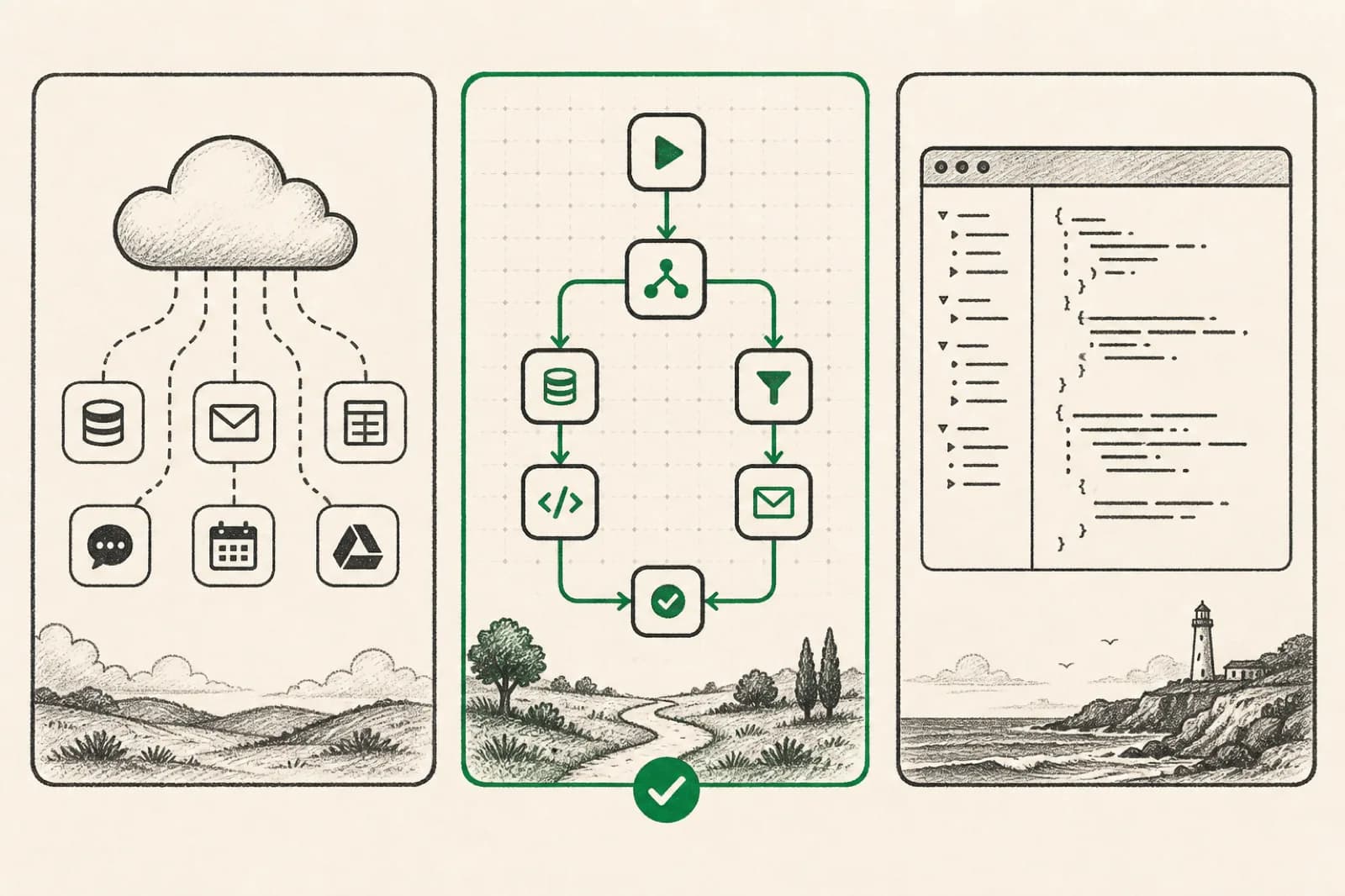
n8n vs Zapier vs Custom Code: Pick the Runtime, Not the Logo
A decision table for hosted SaaS automation, self-hosted n8n, and shipping the flow inside your app: control, cost, secrets, versioning, and lock-in.
Delivery
5 min read
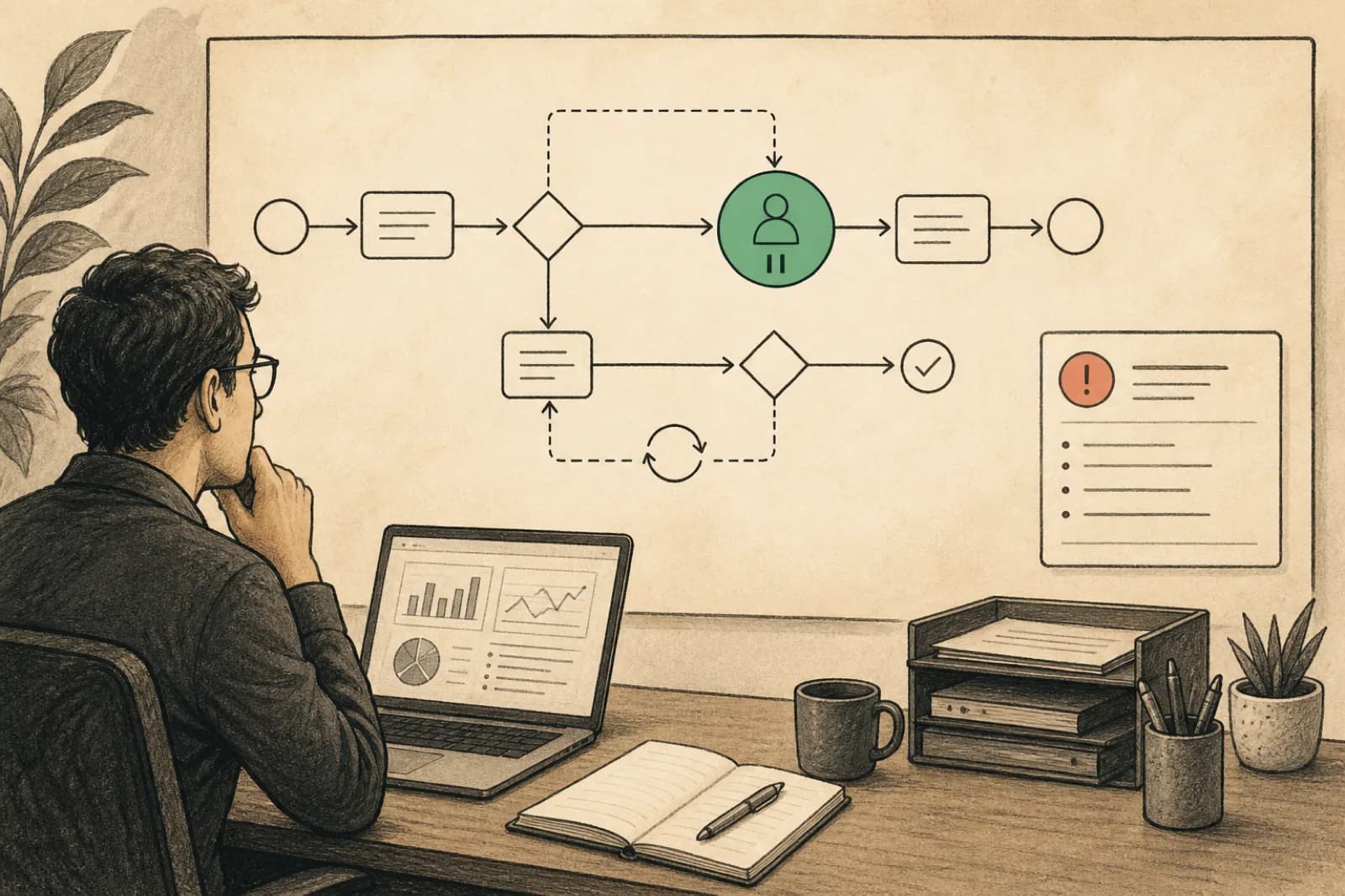
n8n in Production: Retries, Idempotency, and Human Checkpoints
Why workflows that work in the editor fail at volume, and the controls that keep n8n automations trustworthy: retries, idempotency, dead letters, and approvals.

AI
5 min read
AI Inside n8n: Useful Nodes, Not Unbounded Agents
How to use LLM steps in n8n for classify, summarize, and extract work without turning every workflow into chatbot theater.

Delivery
5 min read
Who Owns the n8n Instance After the Demo
Credentials, environments, change control, and the handoff package so an n8n workflow does not die with the person who built the canvas.

Productivity
12 min read
Cognitive Load: Why Your Brain Feels Tired And How To Reduce It To Think Faster and Clearer
Why you feel wiped at 2 PM with no physical work to show for it, what John Sweller's cognitive load theory actually means for working memory, and nine tactics you can use today to cut overload and improve focus.

AI
8 min read
AI MVP in 2026: What "Minimum" Means When the Model Is the Risk
A practical framework for scoping an AI-powered first release when the model, the API, or the data pipeline is the real unknown, not the interface.

AI
7 min read
How to Choose an LLM for a Product in 2026
A decision matrix for picking a model class by latency, cost, context length, tool use, multimodality, data residency, and lock-in, plus why the choice needs a quarterly revisit.
AI
7 min read
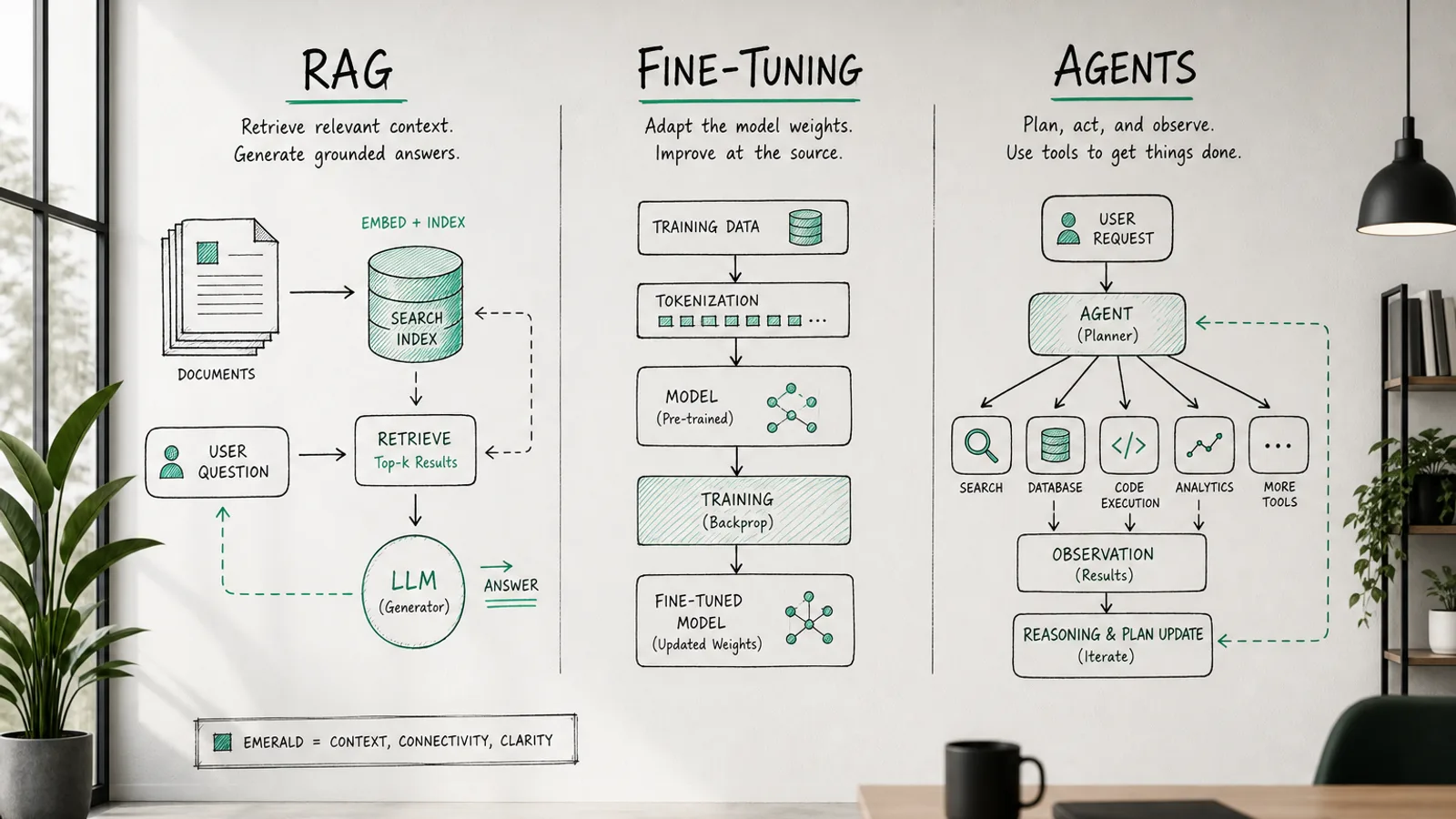
RAG vs Fine-Tuning vs Agents: Pick the First Release Shape
A comparison of retrieval-augmented generation, fine-tuning, and agentic architectures, with a default decision path for choosing the right shape for a v1.
AI
7 min read
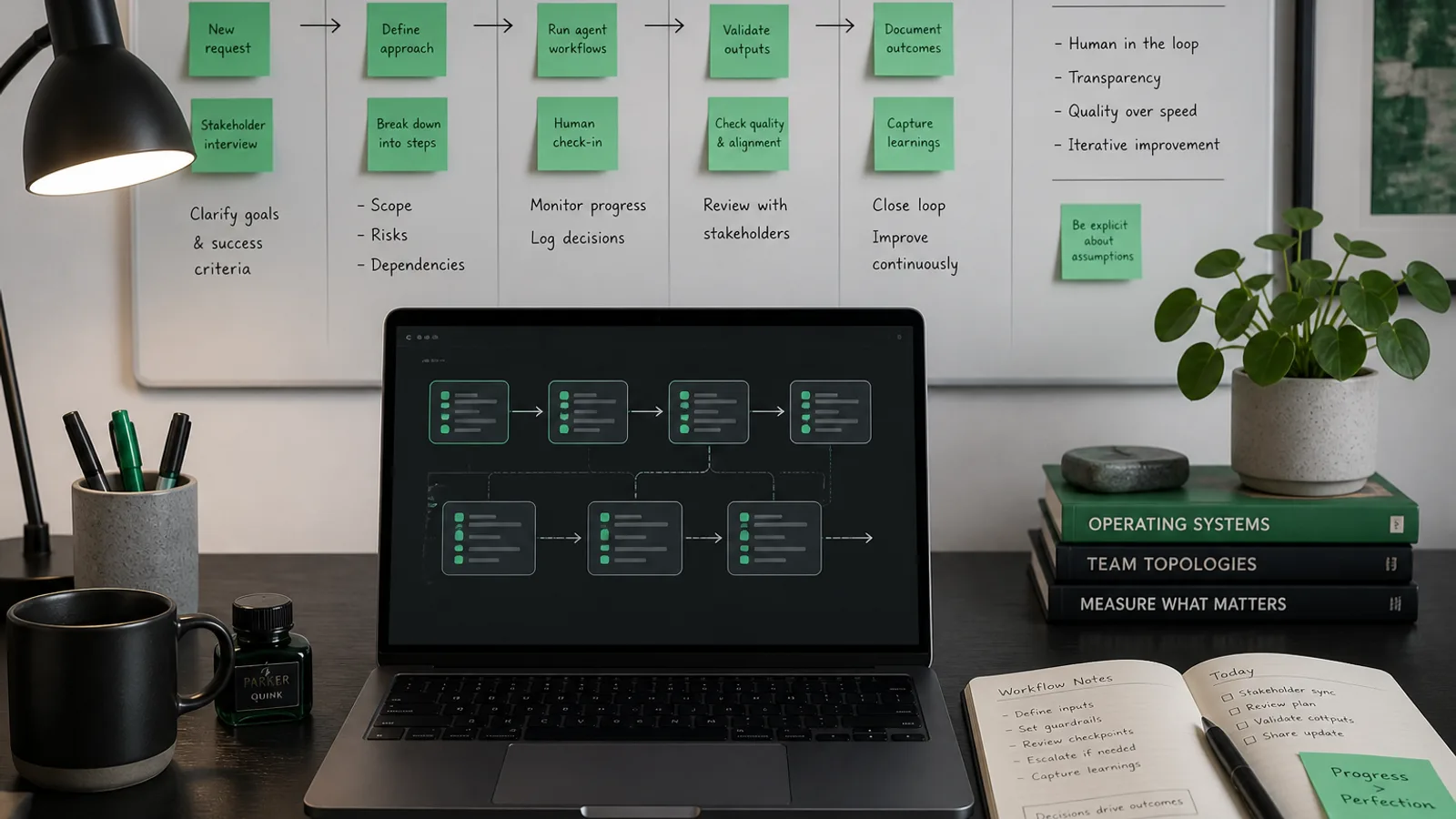
Agentic AI in Products: Workflow, Not Chatbot Theater
Why agentic AI succeeds as a bounded workflow with permissions, audit logs, and human checkpoints, not as an open-ended chatbot with tool access.

AI
8 min read
Long-Context LLMs (Kimi and Peers): When 100k+ Tokens Actually Help
A practical framework for deciding when a 100k-1M+ token context window earns its cost, and when retrieval still wins on price, freshness, and cacheability.
Blockchain
7 min read
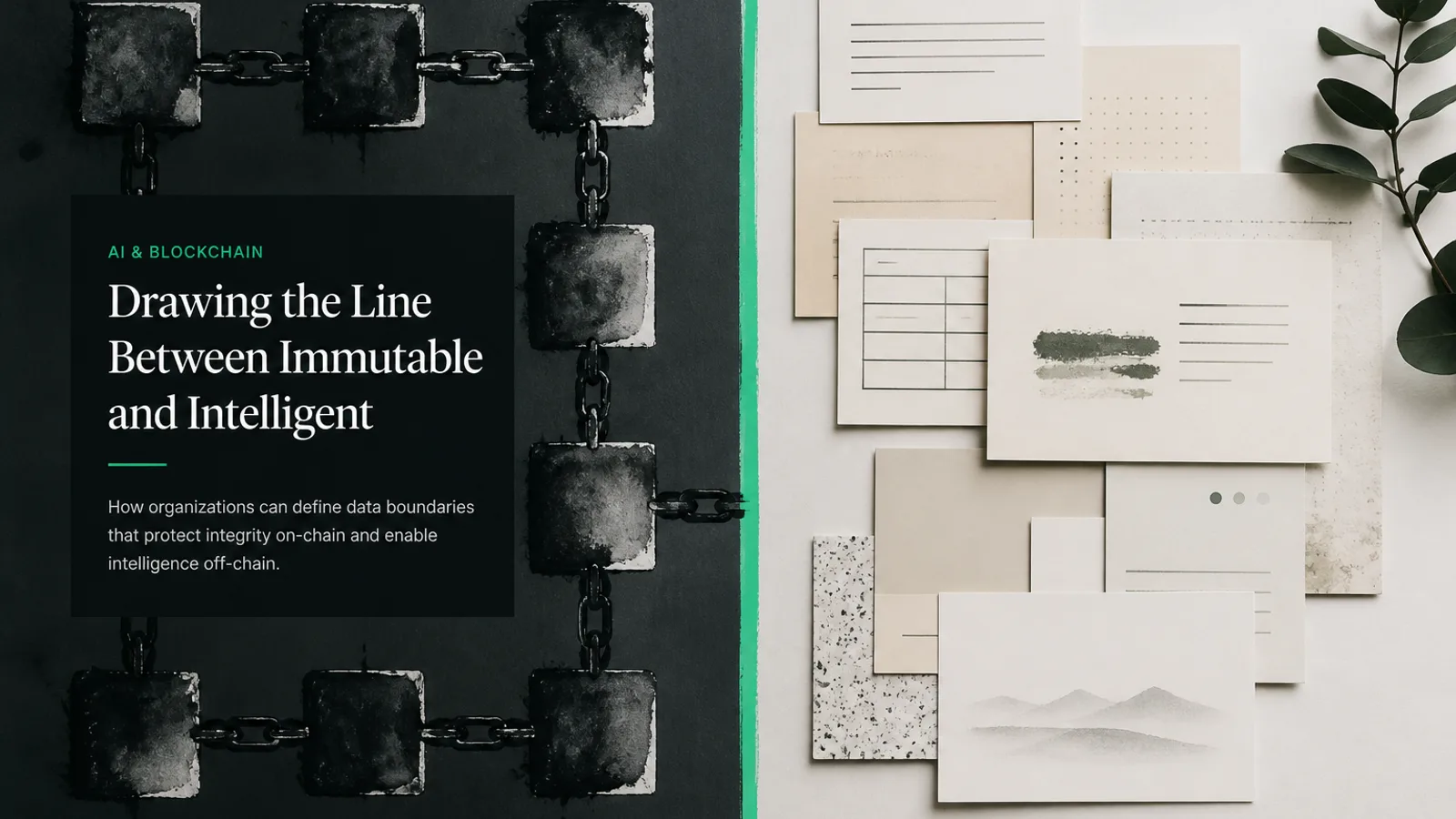
AI + On-Chain Data: What Belongs in the Model vs the Ledger
An architecture framework for deciding what belongs on-chain, off-chain, and inside an AI model when building agents, dashboards, or analytics on top of blockchain data.

Blockchain
8 min read
Crypto Product SEO in 2026: Search, Answer Engines, and Agents
A practical SEO and AEO playbook for crypto and Web3 products: server rendering, llms.txt, quotable answer blocks, and avoiding wallet-gated content that no search or AI engine can crawl.
AI
7 min read
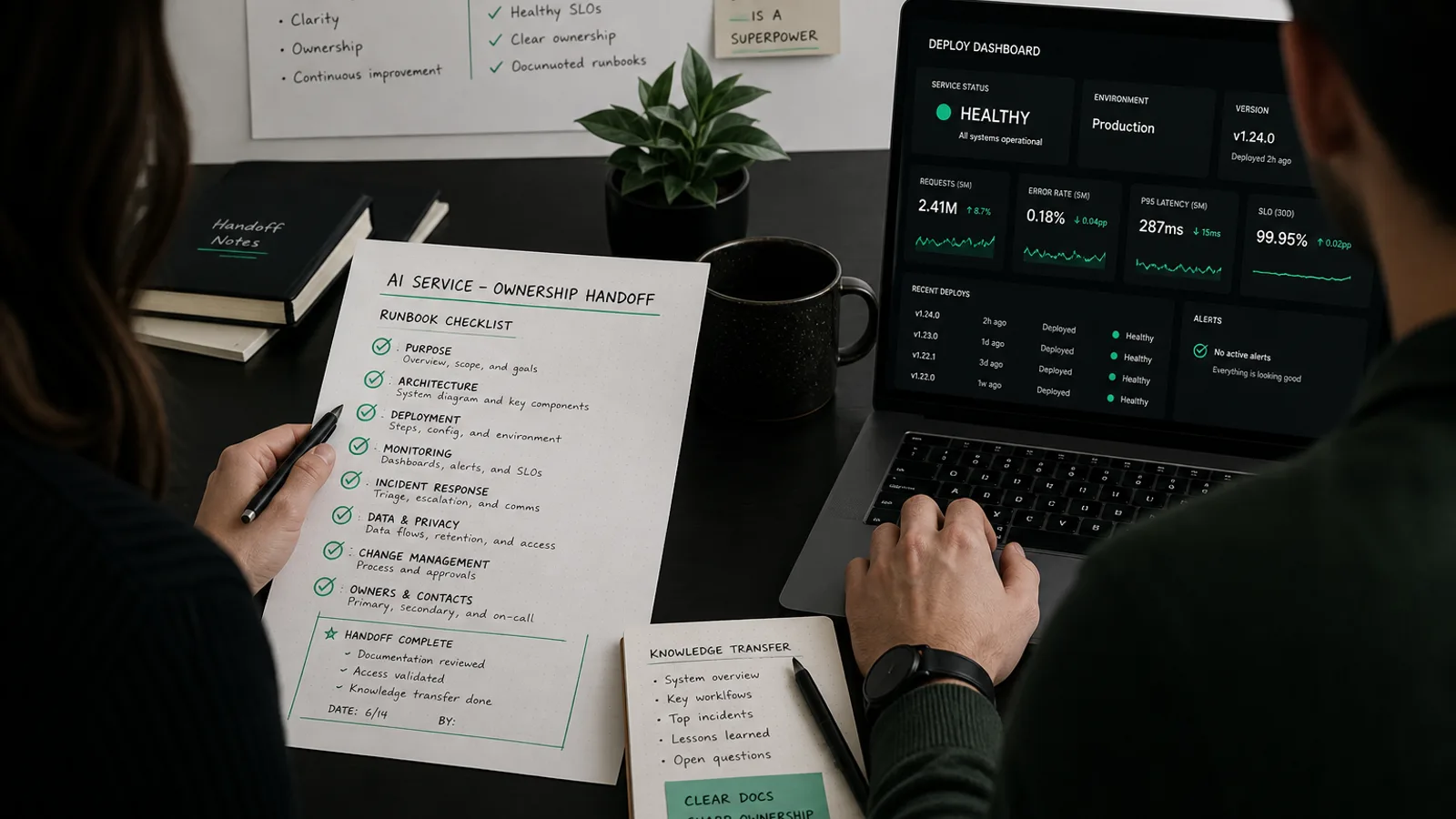
AI Product Ownership: What to Hand Off After the First Demo
The operational package a team needs after an AI feature clears its first demo: runbooks, eval suites, prompt and version ownership, cost dashboards, and on-call coverage.

Startups
6 min read
Minimum vs Incomplete: How to Build a Better First Release
The difference between shipping fast and shipping thoughtfully: a practical framework for building MVPs that test a real product hypothesis.

Blockchain
6 min read
Beyond the Hype: Where Blockchain Actually Makes Business Sense
A grounded look at which industries benefit from decentralized tech and which ones are better off without it.

Mobile Development
6 min read
Flutter vs React Native: How to Choose for Your Product
A practical look at when Flutter, React Native, or native development may fit a mobile product.

Talent
6 min read
Staff Augmentation vs Dedicated Team: Which Model Fits?
Compare embedding engineers into your squads with standing up a dedicated pod that owns a workstream end to end.

Delivery
6 min read
Working with a Remote Engineering Partner in Pakistan
How to evaluate a Pakistan-based engineering partner for remote delivery worldwide, with clear expectations on HQ, communication, and ownership.

Startups
5 min read
Build an MVP with a Partner or Hire Engineers?
A practical guide for founders choosing between a scoped MVP engagement and hiring engineers to build inside your team.
Start here
Essay series
Guided paths—pick a lane and start with the first essay.
Common questions
Blog questions
How we publish and how to cite essays.
What does the SolveMotive blog cover?
Practical essays on first releases, engagement models, mobile and blockchain trade-offs, and remote product engineering—written to help teams decide, not to chase keyword volume.
How often do you publish?
We prioritize depth over cadence. New essays ship when we have a clear decision framework worth citing.
Can we republish or quote articles?
Short quotations with attribution and a link to the original URL are fine. For republication, contact hello@solvemotive.com.
Still stuck on a specific constraint? Book a scoping call →