
Clear scope
The first useful release is named before seats and tooling scale.

SolveMotive
From motive to operable release
API Testing
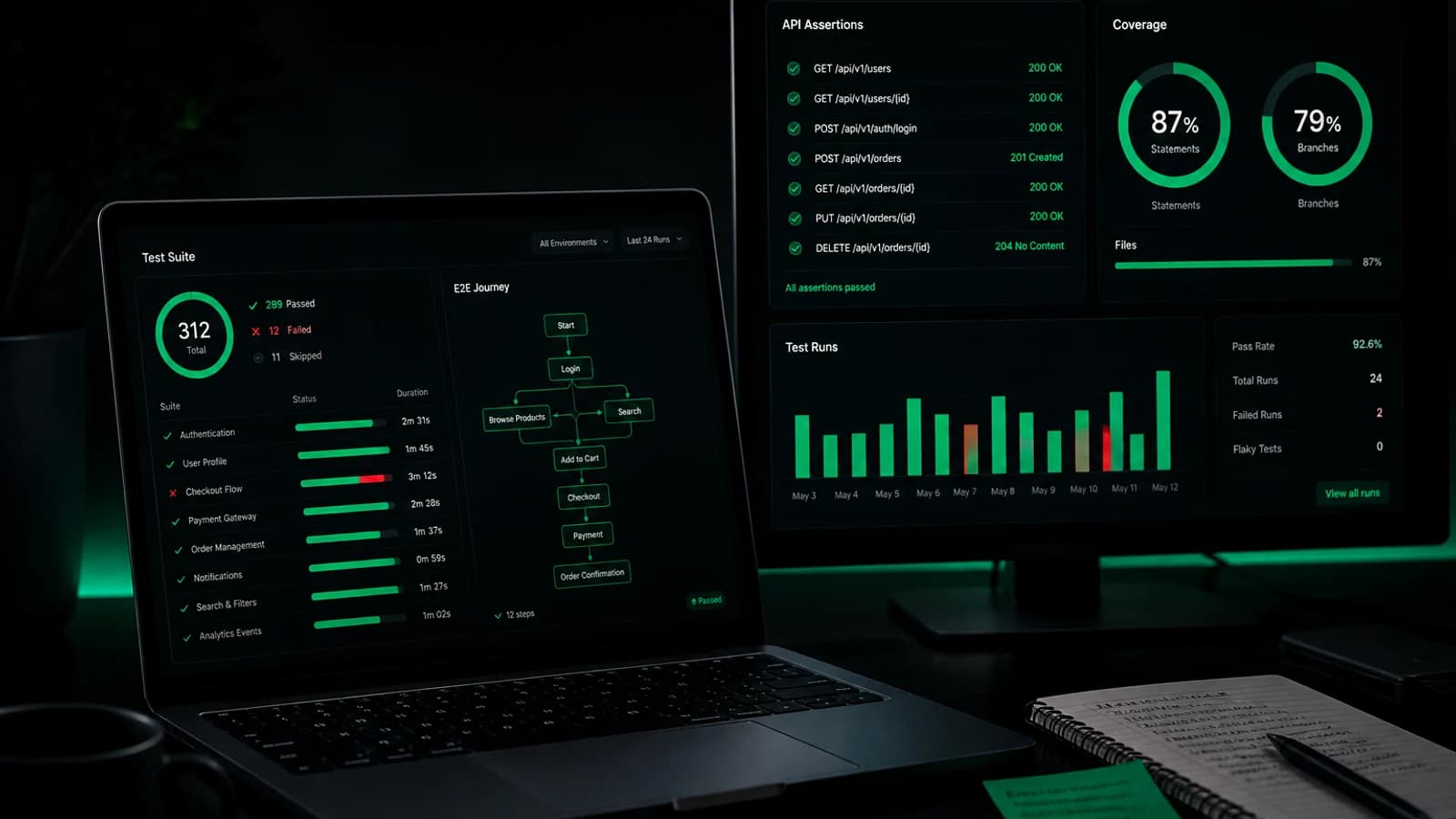
Contract and behavioral tests for services that other systems depend on. We lock decisions early so delivery stays reviewable and transferable.
Delivery surface
Contract and behavioral tests for services that other systems depend on.
Engagement overview
Contract and behavioral tests for services that other systems depend on.
We scope the boundary, success signal, and operating model before scaling implementation—so the work stays reviewable and transferable.
Who we help
Domain outcomes
The first useful release is named before seats and tooling scale.
Implementation includes tests, observability, and acceptance criteria.
Docs and next steps leave your team able to continue.
Success signals are agreed so demos are evidence, not theater.
Capabilities
Final choices follow your operating model and constraints. These are common foundations for api testing work.
Plan the engagement
These choices determine architecture, team shape, and what ships first.
OpenAPI, consumers, or both.
Mocks vs shared staging realism.
What blocks release vs warns.
Where we help
Breaking changes caught early.
Auth, edge cases, and error paths.
Where volume or latency matters.
How we deliver
We lock the product boundary, success signal, and ownership model before scaling implementation.
Document users, constraints, integrations, and the smallest useful release.
Ship a reviewable increment with tests, observability, and clear acceptance.
Leave docs, runbooks, and next-step options your team can actually run.
Common questions
Answers to common questions about working with SolveMotive on api testing.
REST, GraphQL, and event APIs—scoped to your stack.
We cover auth and common abuse cases; deep pen tests are separate.
This page goes deeper on a specific capability. The parent practice page shows the full capability map and how engagements usually combine.
Yes. Most engagements combine related capabilities under one accountable delivery plan.
Still stuck on a specific constraint? Book a scoping call →