
Clear scope
The first useful release is named before seats and tooling scale.

SolveMotive
From motive to operable release
Test Automation
Stable automation suites that protect release velocity. We lock decisions early so delivery stays reviewable and transferable.
Capability deep dive
Stable automation suites that protect release velocity.
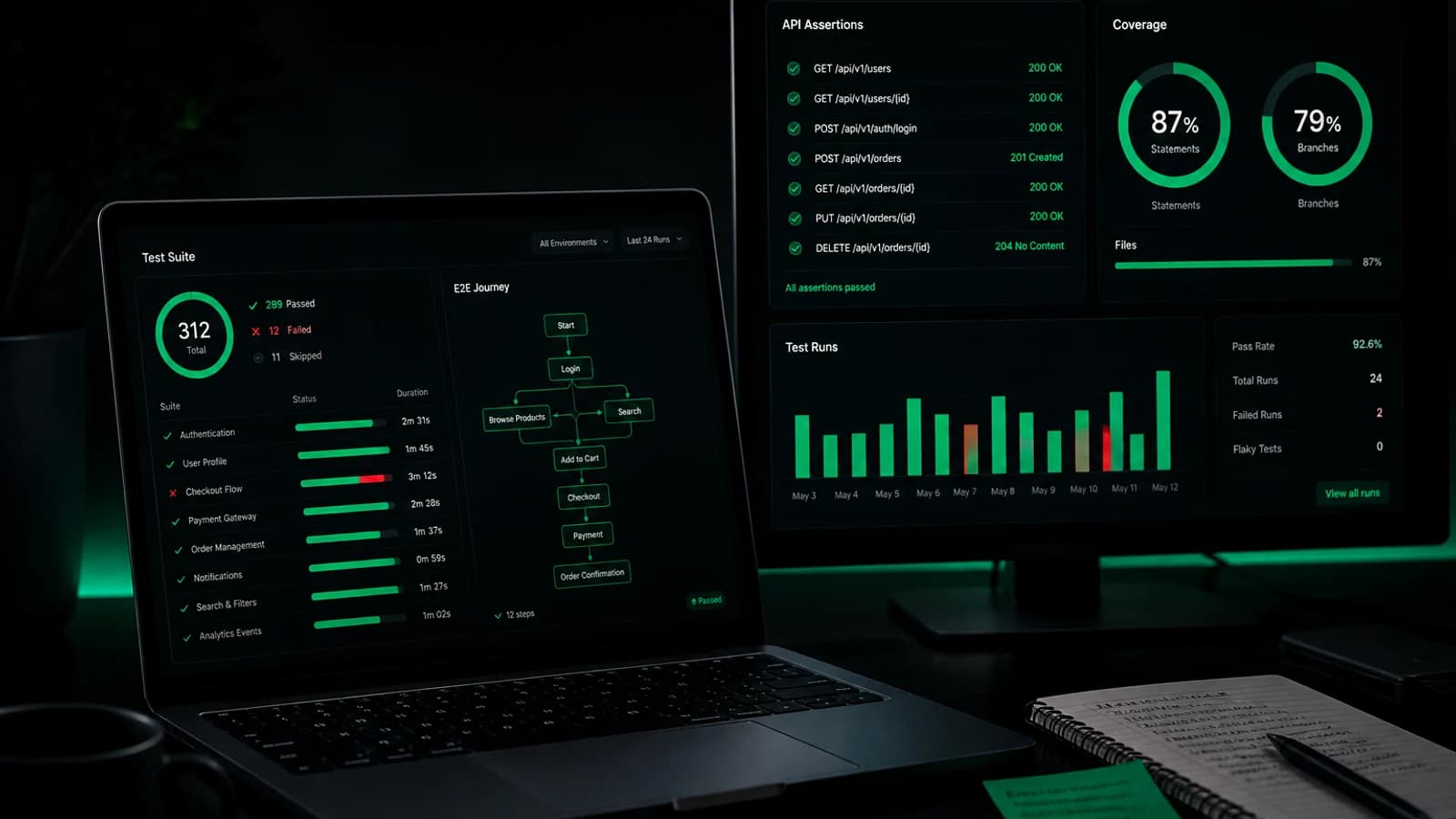
E2E
CI
Flake control
Coverage
Engagement overview
Stable automation suites that protect release velocity.
We scope the boundary, success signal, and operating model before scaling implementation—so the work stays reviewable and transferable.
Who this is for
What you get
The first useful release is named before seats and tooling scale.
Implementation includes tests, observability, and acceptance criteria.
Docs and next steps leave your team able to continue.
Success signals are agreed so demos are evidence, not theater.
Technology
Final choices follow your product constraints. These are typical foundations for test automation engagements.
Plan the engagement
Resolve these boundaries early so scope and architecture follow the actual product context.
Unit, API, and UI balance for your stack.
Who maintains suites when product moves.
What must pass before merge or release.
Where we help
Journeys that must never regress silently.
Retries, isolation, and environment hygiene.
Fast feedback without theater.
How we deliver
We lock the product boundary, success signal, and ownership model before scaling implementation.
Document users, constraints, integrations, and the smallest useful release.
Ship a reviewable increment with tests, observability, and clear acceptance.
Leave docs, runbooks, and next-step options your team can actually run.
Common questions
Answers to common questions about working with SolveMotive on test automation.
No—automation covers regression; exploration stays human.
We stabilize and prune before expanding.
This page goes deeper on a specific capability. The parent practice page shows the full capability map and how engagements usually combine.
Yes. Most engagements combine related capabilities under one accountable delivery plan.
Still stuck on a specific constraint? Book a scoping call →