


Surface
You can usually tell which systems were built for a single cryptographic era. The algorithm name is hard-coded in config keys, TLS cipher suites are a tribal memory, and “rotating crypto” means a six-month program with a scary rollback plan. That is the opposite of crypto-agility.
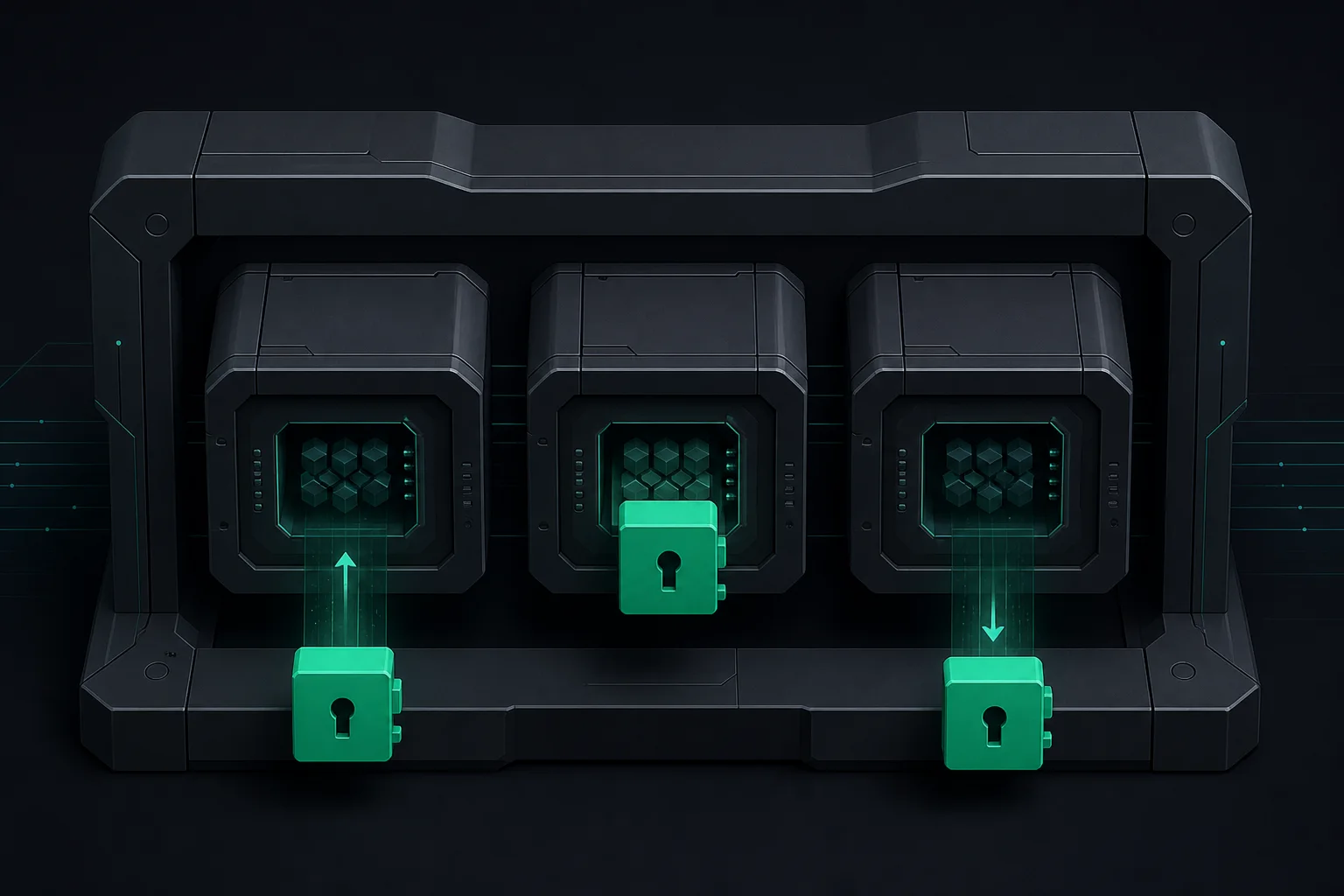
Crypto-agility is the ability to change cryptographic primitives without rebuilding the system around them, like replacing a lock without rebuilding the house. Without it, a single broken or deprecated primitive can trigger months of refactoring. With crypto-agility, you can rotate to a safer option, keeping compatibility and restore service in days.
That framing matters more in 2026 than it did when “crypto” mostly meant TLS 1.2 and AES-GCM. Financial products now sit on a stack of primitives: wallet signing curves, payment message MACs, HSM policies, MPC shares, archive encryption, and (increasingly) post-quantum candidates. If any one of those becomes obsolete, you need a path that does not require rewriting settlement logic or customer journeys.
This essay opens a SolveMotive series on crypto-agile financial infrastructure. Next we cover threat modeling for fintech, then key management with HSMs and MPC, post-quantum migration, and compliance as crypto architecture. For product fit before you harden crypto, see where blockchain makes business sense.
Why “we’ll upgrade later” is now an expensive bet
Breach economics still punish slow reaction. IBM’s Cost of a Data Breach Report 2024 put the global average at $4.88 million. The 2025 report showed a decline to about $4.44 million globally—still a board-level number, and financial services have historically sat among the highest-cost industries when incidents hit payment, identity, or custody systems.
Meanwhile, standards are moving on a calendar, not on your roadmap comfort. In August 2024, NIST finalized FIPS 203 (ML-KEM), FIPS 204 (ML-DSA), and FIPS 205 (SLH-DSA). NIST IR 8547 sketches a deprecation path toward 2035. Waiting for a hard cutover is how teams discover that certificates, hardware, and partner APIs all assumed one algorithm forever.
There is also a quieter risk: harvest-now-decrypt-later. Adversaries can collect encrypted traffic and archives today and decrypt them when cryptanalysis or quantum capability improves. Long-lived financial records—KYC packs, trade confirmations, custody statements—are exactly the kind of data that rewards patience on the attacker side.
What crypto-agile architecture actually looks like
Treat cryptography as a versioned capability, not a library call sprinkled through services.
Stable interfaces, swappable providers
Product services
Ask for policy P — never hard-code AES/RSA/curve names
Crypto module
Algorithm ID · key ID · dual-run window
Providers
KMS · HSM · MPC · library — swappable behind the interface
Insight: replace the lock, not the house — products talk to policies; providers implement primitives you can rotate.
1. Stable interfaces, swappable providers
Encryption, signing, key wrap, and KEM operations should sit behind module boundaries with explicit algorithm identifiers, key IDs, and policy metadata. Application code asks for “seal this payload under policy P,” not “call AES-256-GCM with this hard-coded IV scheme.” That separation is what lets you dual-run old and new algorithms during migration windows.
2. Algorithm negotiation at every trust boundary
Partners, devices, wallets, and internal services will not upgrade on the same day. You need handshake or envelope formats that advertise supported suites, prefer the safest mutually supported option, and log downgrades as security events. The same discipline applies to on-chain and off-chain boundaries—see AI and on-chain data boundaries for how data placement decisions interact with crypto assumptions.
3. Inventory before elegance
You cannot rotate what you cannot find. Map every place a primitive appears: mobile apps, HSMs, cloud KMS, batch jobs, cold archives, third-party CASPs under EU MiCA timelines, and vendor SDKs that hide algorithms behind “secure by default” slogans.
| Capability | Fragile pattern | Crypto-agile pattern | Typical migration window |
|---|---|---|---|
| Data at rest | Hard-coded AES key in service config | Envelope encryption via KMS with algorithm + key version | Days–weeks once inventory exists |
| Transport | Fixed cipher suite in custom client | Negotiated TLS / mTLS with policy allowlists | Hours–days with canaries |
| Signatures | Curve baked into protocol structs | Algorithm ID + key ID in message headers | Weeks with dual-verify |
| Long-term archives | One-shot encrypt with no re-wrap path | Periodic re-encrypt / re-wrap under current policy | Phased by retention class |
A practical starting checklist
- Name the policies. “Customer PII at rest,” “payment authorization signatures,” “wallet custody,” each with allowed algorithms and owners.
- Add version fields now. Even if you only support one suite today, leave room for a second.
- Measure cutover cost. Time a dry-run rotation on a non-critical path; that number becomes your agility KPI.
- Separate identity of keys from algorithms. Key IDs outlive the suite that created them when you re-wrap correctly.
- Budget for dual-run. Compatibility periods are cheaper than emergency forks.
How this series will help you decide
Crypto-agility is an architecture property with product consequences: time-to-rotate, partner friction, audit evidence, and incident containment. The rest of the series turns the idea into decisions: what to threat-model first, how to choose HSM vs MPC custody shapes, how to plan post-quantum dual-stack migration, and how compliance obligations become design constraints rather than after-the-fact paperwork.
If you are mapping crypto risk across a payments or Web3 stack, our blockchain development and cyber security practices can help inventory primitives and design rotation paths before a standard or incident forces the calendar.