
Surface
"Which LLM should we use" is the wrong first question for most product teams, because it assumes a single stable answer exists. It does not. The right question is "which model class fits this specific task's constraints today, and how do we make swapping it cheap when relative model quality shifts again." Those shifts are fast: the Stanford AI Index 2025 recorded the performance gap between the top model and the 10th-ranked model on Chatbot Arena narrowing from 11.9% to 5.4% in a single year, alongside US private AI investment reaching $109.1 billion and generative AI investment specifically growing 18.7% to $33.9 billion. When that much capital and competition compress the quality gap between vendors this quickly, betting your architecture on one provider's model being permanently best is a weak bet.
This piece lays out a decision matrix you can actually use, names the current model classes without pretending any one of them is a permanent leader, and argues for a review cadence rather than a one-time decision.
The dimensions that actually matter for a product decision
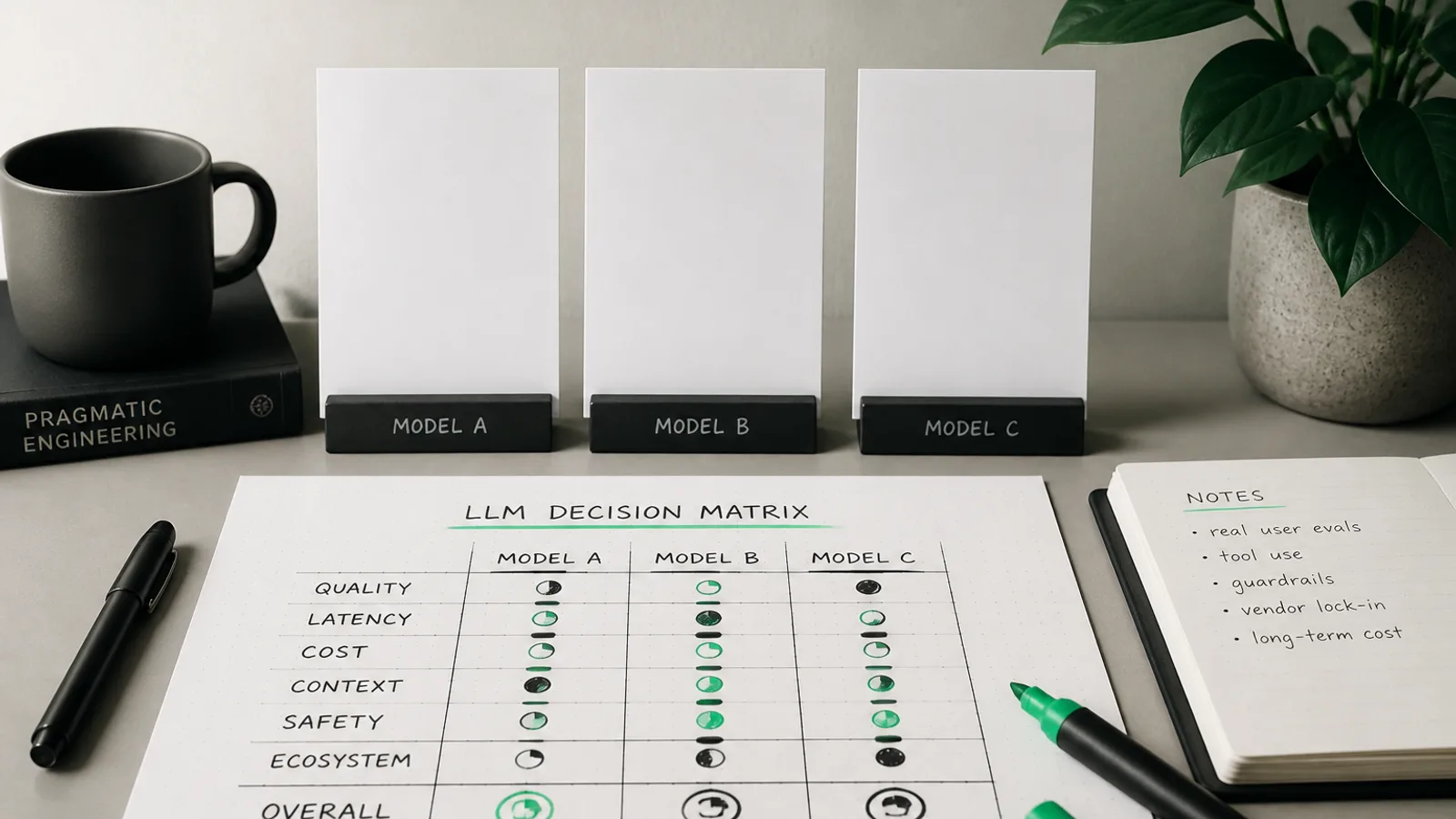
Most "best LLM" comparisons rank models on general benchmark leaderboards, which is close to useless for a specific product decision. What matters is how a model performs against your task's actual constraints:
- Latency: interactive chat needs sub-second-to-a-few-second responses; batch summarization can tolerate much more
- Cost per request: at what volume does a small per-token difference become a material line item
- Context window: does your task need to reason over a handful of paragraphs or an entire codebase/contract set
- Tool use / function calling reliability: does the task require the model to call APIs, run code, or query a database accurately
- Multimodality: whether the product needs image, audio, or video understanding in addition to text
- Data residency and compliance: can the vendor process data in your required region, and under what contractual terms
- Vendor lock-in risk: how much of your product logic depends on provider-specific features that don't port cleanly
Score each dimension for your specific use case before looking at any model, then match to a class. Reversing that order, starting with a favorite vendor, is how teams end up retrofitting a task to a model instead of the other way around.
Model classes in 2026, without the marketing
Rather than naming individual model versions that will be outdated within a quarter, it's more durable to think in classes:
| Class | Typical strengths | Typical trade-offs | Best fit |
|---|---|---|---|
| GPT-class (OpenAI-family) | Broad tool support, strong function calling, wide multimodal coverage | Cost at high volume, some lock-in to provider-specific APIs | General-purpose product features, broad tool integration |
| Claude-class (Anthropic-family) | Strong long-form reasoning, careful instruction following, competitive coding performance | Narrower multimodal surface than some competitors historically | Writing-heavy, reasoning-heavy, or safety-sensitive workflows |
| Gemini-class (Google-family) | Native multimodality, very competitive long-context handling, tight integration with Google infrastructure | Vendor lock-in if deeply tied to Google Cloud | Multimodal products, teams already on Google Cloud |
| Long-context specialists (Kimi/Moonshot-class and peers) | Very large context windows for whole-document or whole-repo reasoning | Less mature tooling outside core reasoning | Legal/contract review, large codebase analysis, research synthesis |
| Open-weight (Llama-class, DeepSeek-class) | Self-hostable, full data control, no per-token vendor fee at scale, fine-tunable | Requires your own serving infrastructure and ongoing ops | Data residency requirements, high-volume steady workloads, custom fine-tuning |
None of these classes is universally "best." A support chatbot with tight latency and cost requirements has different optimal choices than a legal document analysis tool that needs to reason across a 200-page contract, which has different requirements again from an on-device or air-gapped deployment that rules out API-based classes entirely.
Worked example: three tasks, three different answers
Consider three products evaluating the same decision matrix:
- A customer support widget with strict latency requirements and high request volume likely favors a cost-efficient GPT-class or open-weight model with strong function calling, since most turns are short and well-scoped.
- A contract review tool that needs to reason across a full agreement plus exhibits favors a long-context specialist or a Gemini-class model, where context window and long-document coherence matter more than raw response speed.
- A regulated fintech product with strict data residency requirements may be pushed toward an open-weight, self-hosted model regardless of raw benchmark scores, because the deployment constraint dominates the decision.
This is why "which LLM is best" as a standalone question rarely produces a useful answer. Your task profile is not a footnote to the decision. It is the decision.
Build for a quarterly revisit, not a permanent choice
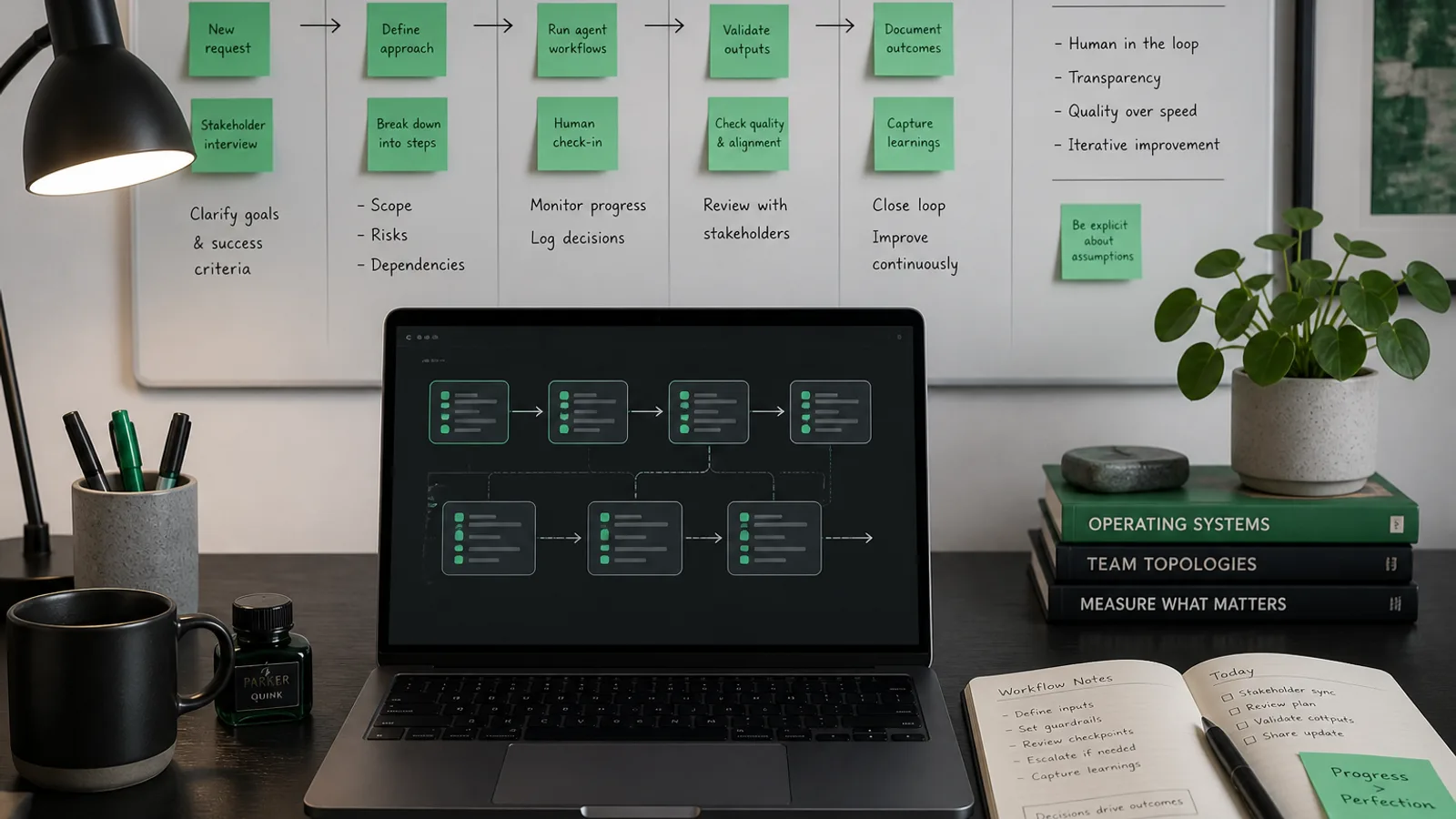
Given how fast relative model quality moves, the model layer should be treated as a replaceable component, not foundational architecture. Practically, that means:
- Abstract model calls behind an internal interface so swapping providers does not require rewriting business logic
- Keep your evaluation set (see our AI MVP piece for how to build one) as a living asset you re-run against new model releases
- Schedule a quarterly check: re-run the eval set against current model options and confirm the incumbent is still the right choice, rather than assuming it
- Track cost and latency in production so a model regression or price change is visible immediately, not discovered at the end of a billing cycle
Teams that build this discipline in from day one treat a model upgrade as a routine maintenance task. Teams that hardcode a single vendor's SDK throughout their codebase treat it as a migration project, usually attempted under pressure after a price increase or an outage.
How this decision interacts with architecture choice
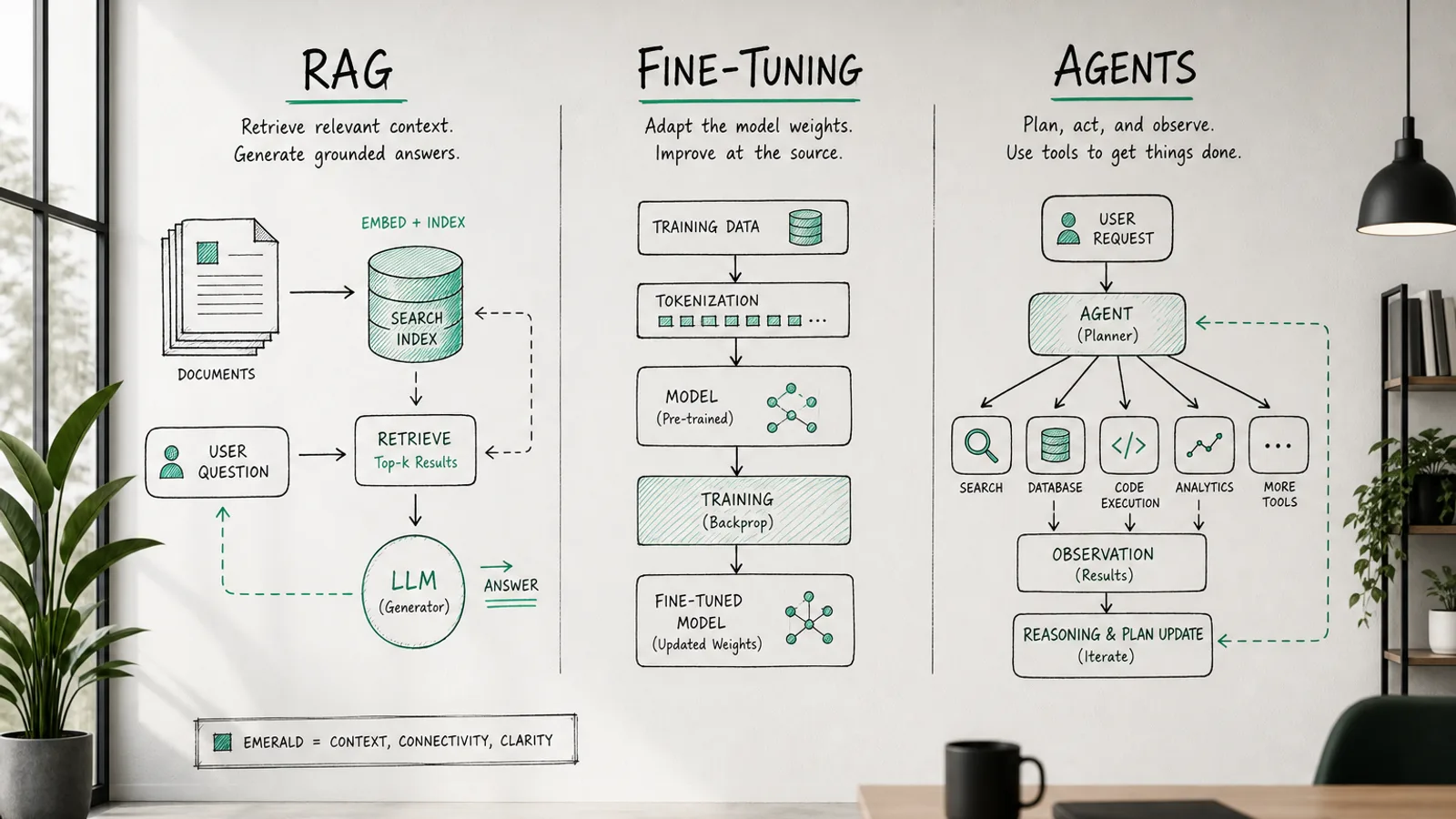
Choosing a model class is only half of the decision; the other half is what you build around it. A model choice that assumes heavy retrieval looks different from one that assumes fine-tuning or agentic tool use. We cover how to pick between those shapes for a first release in RAG vs fine-tuning vs agents, and how to decide whether your task even needs a long-context model rather than retrieval in long-context LLMs: when they actually help.
A practical selection checklist
Before committing to a model class for a product feature, write down answers to:
- What is the maximum acceptable latency for this specific interaction, not the product as a whole?
- What is the cost ceiling per request at your expected volume, and does it change the answer?
- Does the task need to reason over content larger than a typical context window, or can retrieval narrow it first?
- Does the task require reliable tool/function calling, and has that been tested against real tool schemas, not toy examples?
- Are there data residency, compliance, or contractual constraints that rule out certain vendors regardless of quality?
- How much would it cost, in engineering time, to switch model classes six months from now if this one falls behind?
Teams that answer these questions before choosing a vendor make a decision they can defend and revisit. Teams that pick a vendor first and rationalize afterward tend to discover the mismatch only once a real workload exposes it.
If you want a second opinion on which model class fits your specific product constraints, explore our AI & ML solutions or start a conversation about your use case.