

Surface
Founders and product leads keep applying the same MVP playbook to AI products that they used for CRUD apps, and it keeps producing the wrong artifact. A conventional MVP de-risks the interface: does the workflow make sense, will people use it, does the funnel convert. An AI MVP has a second, usually bigger, unknown underneath the interface: does the model actually do the task reliably enough, on your data, at a cost you can sustain. If you skip that second question, you ship a beautiful screen wrapped around a coin flip.
This matters more in 2026 than it did two years ago because the baseline has moved. The Stanford AI Index 2025 found that 78% of organizations reported using AI in 2024, up from 55% the year before, and that generative AI adoption in at least one business function jumped to 71% from 33%. Model capability moved just as fast on hard technical benchmarks: SWE-bench solve rates went from 4.4% to 71.7% between 2023 and 2024, and the performance gap between the top-ranked model and the 10th-ranked model on Chatbot Arena narrowed from 11.9% to 5.4%. Translation for product teams: the models are genuinely more capable and more commoditized, so the differentiator has shifted from "which model" to "did you validate the task with the model, on your data, before you built the product around it."
The hypothesis an AI MVP actually tests
Every MVP should test one expensive assumption. For an AI feature, that assumption is rarely "will users click this button." It is almost always one of:
- Can the model perform the task at an acceptable accuracy, on real examples of your data, not a curated demo set
- Can it do so within a latency and cost envelope your business model can absorb
- Does it fail in ways that are detectable and recoverable, rather than confidently wrong
If you cannot state which of these three is your riskiest unknown, you are not ready to write a product spec. You are ready to run an evaluation. That distinction is the core difference between an AI MVP and a conventional one, and it changes the order of operations for the whole build.
Write the eval set before you write a line of UI
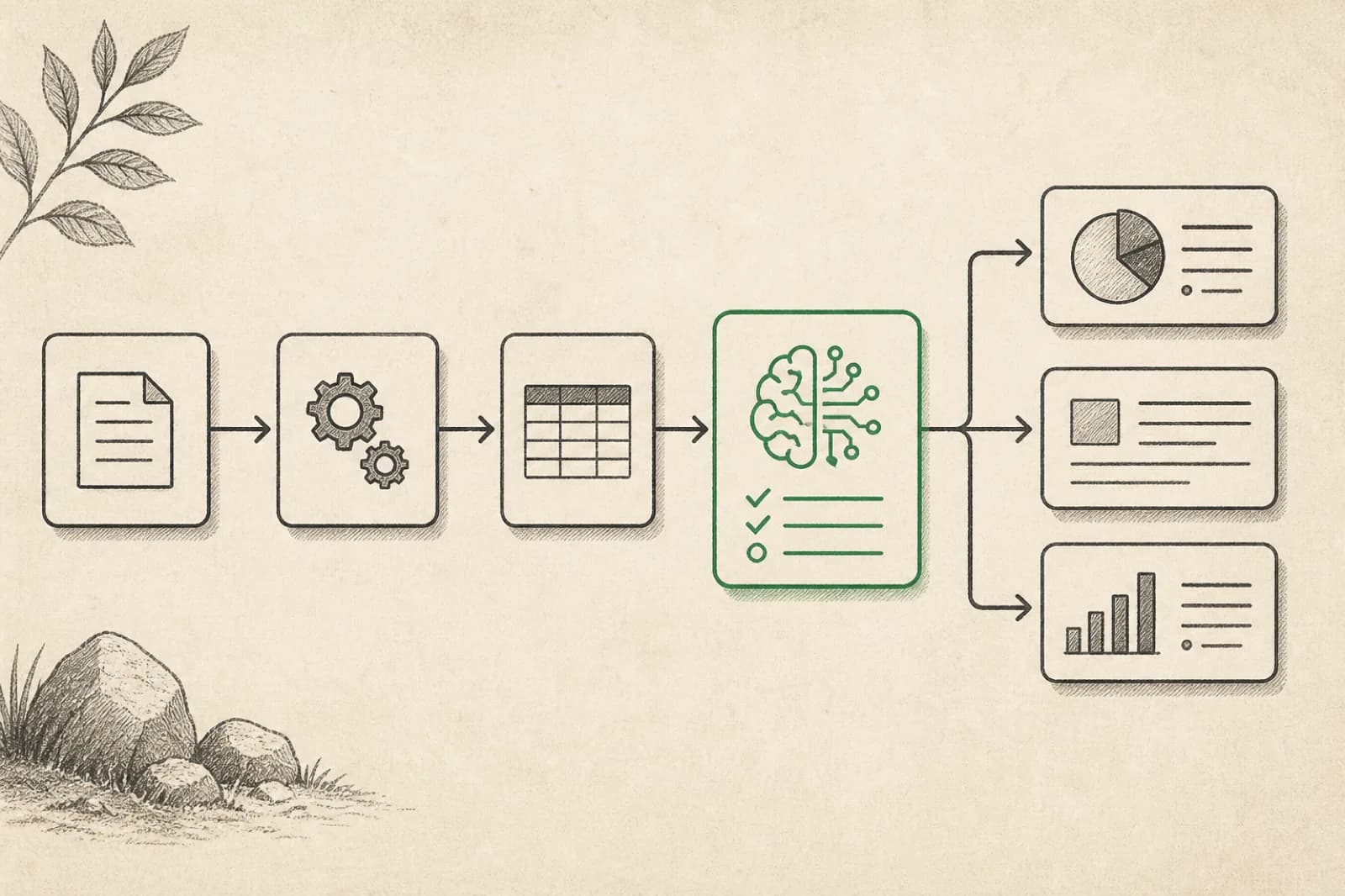
The single most useful artifact in an AI MVP is a labeled evaluation set, not a wireframe: 50 to 200 real or realistic inputs, paired with what a correct or acceptable output looks like, reviewed by someone who understands the domain. Build this before any interface work starts. Run candidate models and prompts against it. Only once a model clears a defined bar on that set does it make sense to invest in surrounding product experience.
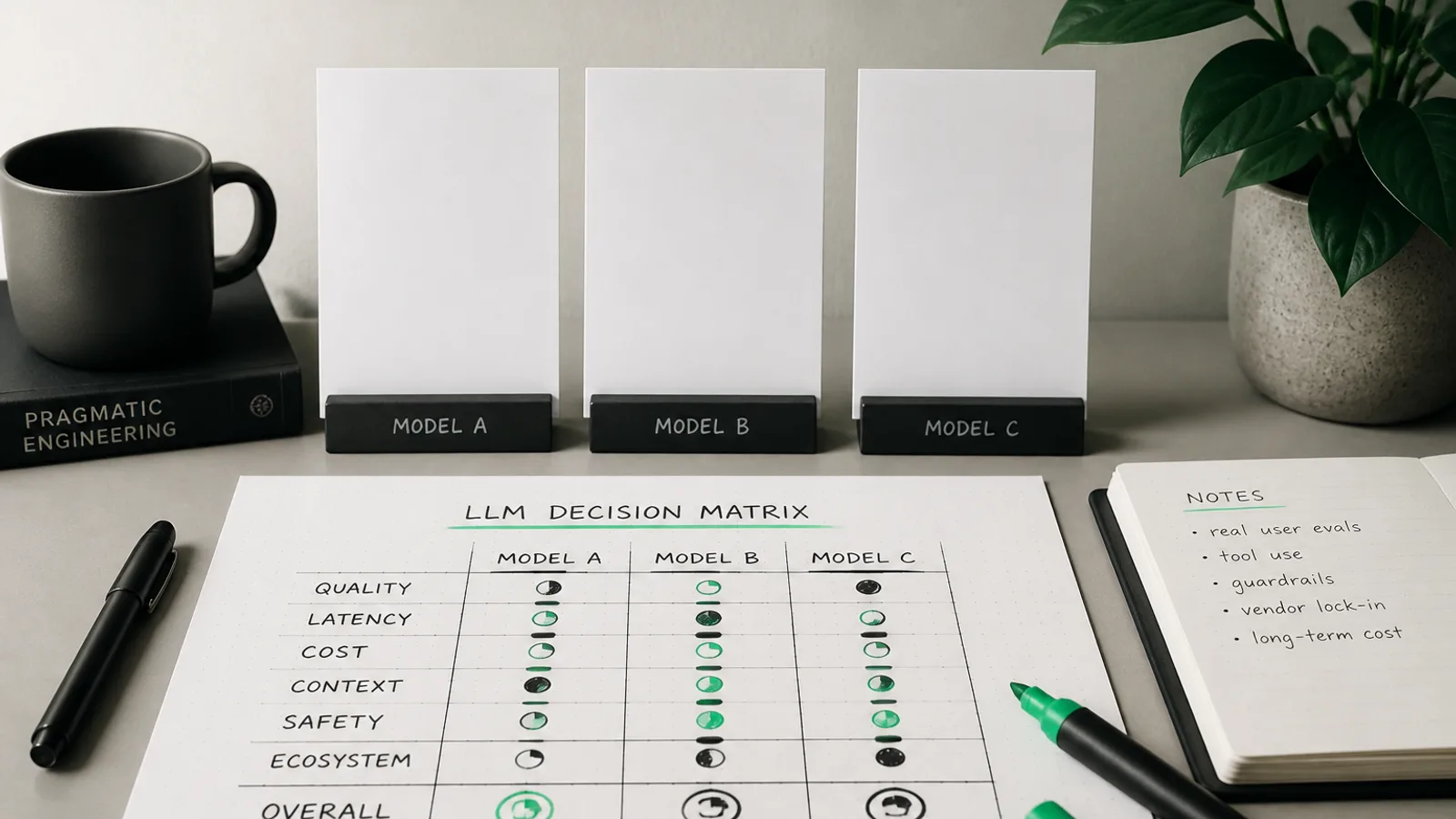
Teams that skip this step usually discover the model's real failure rate in front of paying users, which is the most expensive place to discover it. Teams that build the eval set first often find they need a different approach entirely, whether that's a different model class (see our guide to choosing an LLM for a product), a retrieval layer, or a narrower scope, and they find it in a week instead of a quarter.
Decide your architecture shape before scope, not after
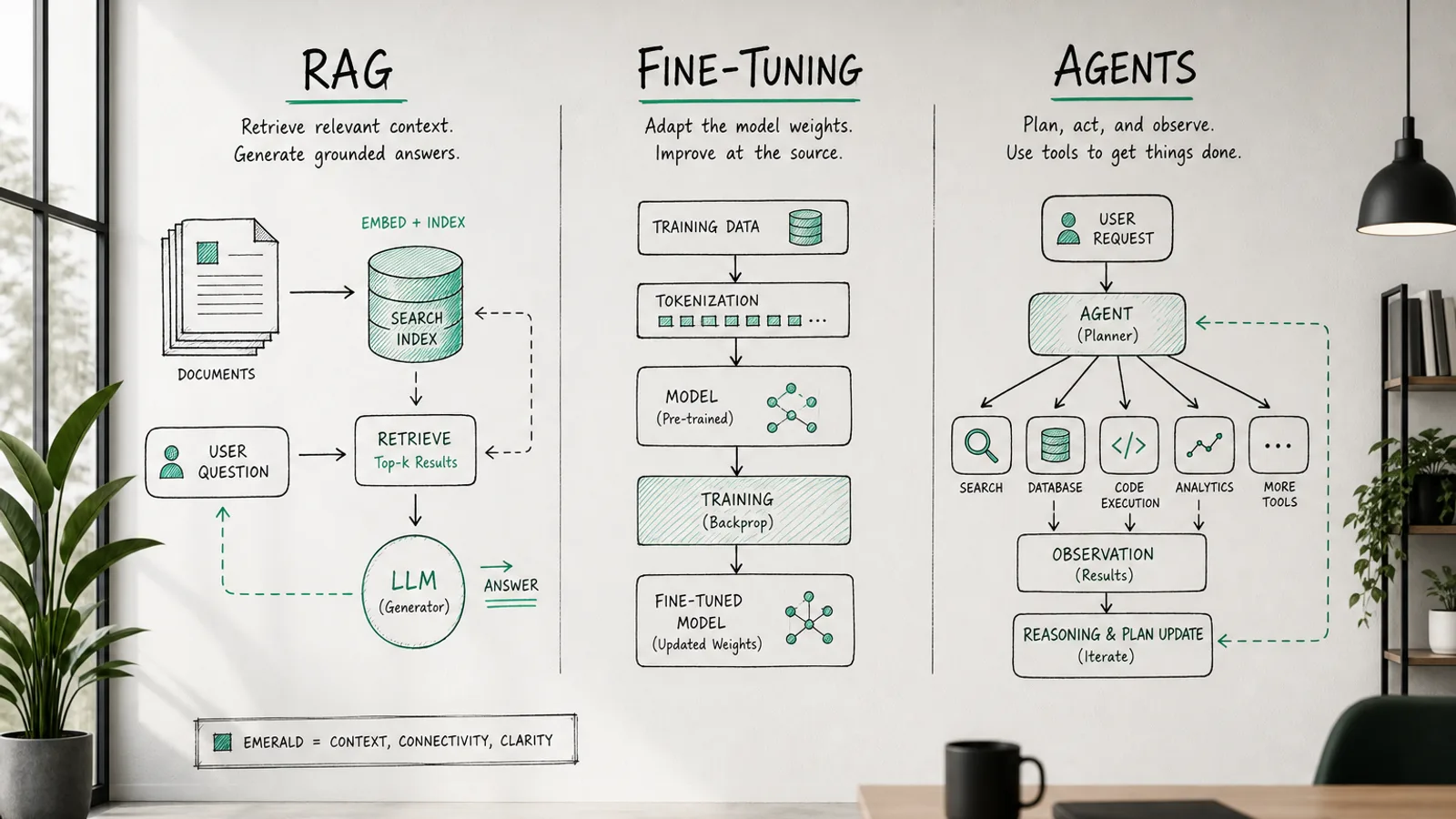
Once the eval set proves the task is feasible, the next decision is whether the first release needs retrieval, fine-tuning, an agent loop, or a plain prompted call against a general-purpose model. This decision should come from evidence, not from what is trendy. Our companion piece on RAG vs fine-tuning vs agents walks through how to pick the right shape for a v1 rather than defaulting to the most complex option.
Failure modes that make an AI MVP look done when it is not
Three patterns recur across AI first releases, and all three produce something that looks like progress while teaching the team almost nothing.
The demo-only MVP
The system works when the founder drives it, using inputs the founder half-consciously chose because they know the model handles them well. It falls apart the moment an independent user, with messy real-world input, touches it. This is the AI-era version of the private-demo MVP problem we described in why most MVPs fail: a system tuned to survive a narration, not real use.
The unbounded agent
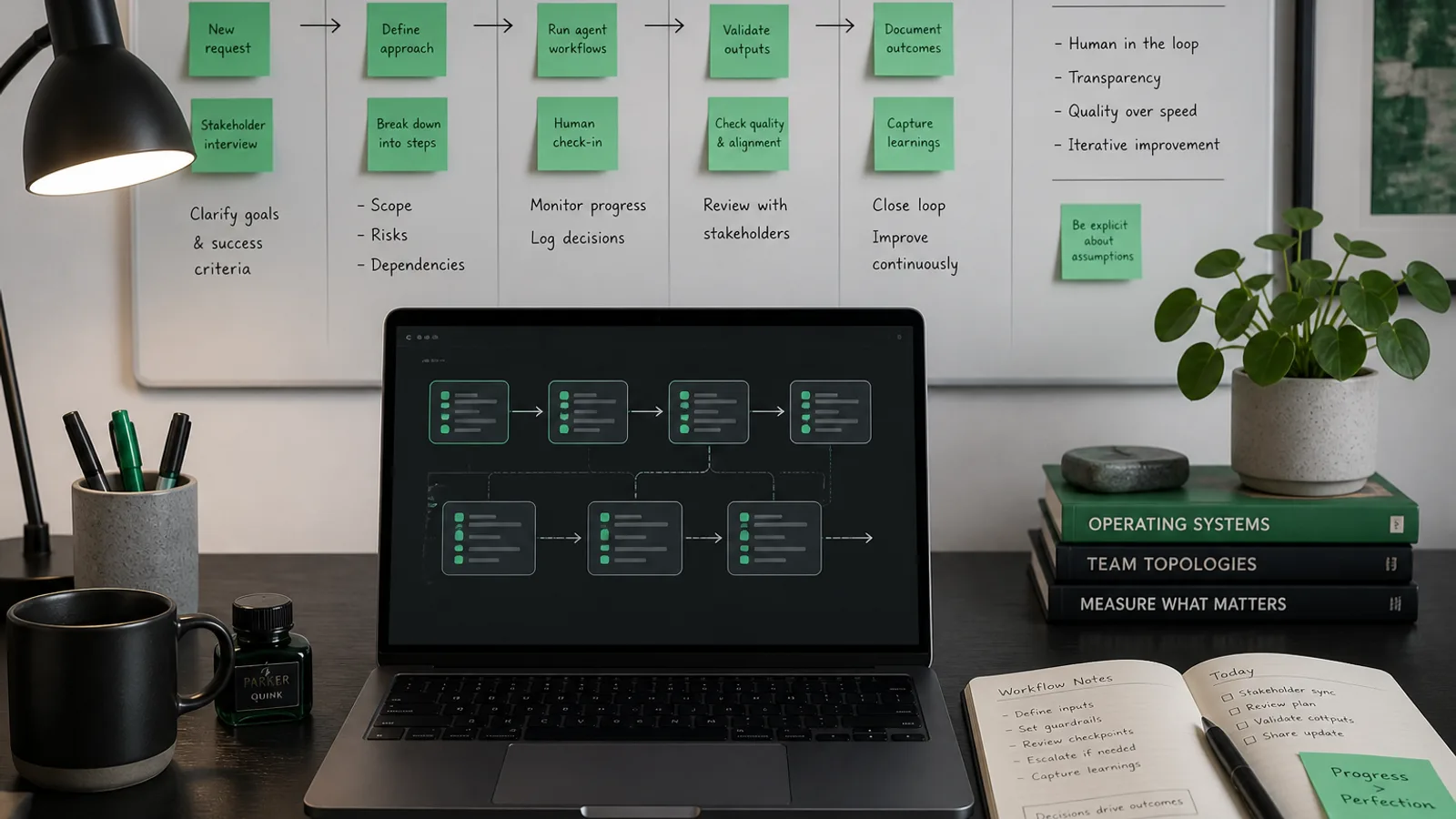
Giving a model tool access and a loose instruction to "figure it out" feels like a shortcut, but without permission boundaries, step limits, and a human checkpoint, an agent can take actions no one approved, burn unpredictable amounts of API spend, or spiral in a retry loop. An MVP agent needs a small, explicit tool list, a maximum step count, and a clear point where it stops and asks. We cover the operational guardrails in more depth in agentic AI in products.
No retrieval, no grounding
Teams frequently ship a chat interface backed by a general-purpose model with no connection to their own data, then are surprised when the model hallucinates specifics about their business, their pricing, or their documentation. If the product needs to answer questions about content that changes or that the base model was never trained on, retrieval is not an optional enhancement. It is part of the minimum.
Setting a success threshold before you build
A conventional MVP defines activation and retention targets before launch. An AI MVP needs an additional, model-specific threshold: an accuracy or acceptance rate on the eval set, an acceptable false-positive/false-negative split for the specific failure that hurts most, and a cost-per-successful-outcome ceiling. Without those numbers written down in advance, every result looks encouraging in hindsight, and the team keeps shipping past the point where the model should have been swapped, retrained, or scoped down.
| Threshold type | What it protects | Example |
|---|---|---|
| Task accuracy on eval set | Whether the model can do the job at all | ≥85% of eval cases meet the "acceptable" bar |
| Cost per successful outcome | Unit economics at scale | Under a defined $/resolved-ticket ceiling |
| Latency at p95 | Whether the UX stays usable | Under 3–5s for interactive flows |
| Failure detectability | Whether bad outputs get caught before reaching users | Confidence scoring or a review step catches X% of low-quality outputs |
These numbers will not be exactly right on day one. That is fine. Writing them down forces the team to have the conversation about "good enough" before launch pressure makes the conversation political.
What actually ships in an AI MVP
A useful AI MVP first release usually includes:
- A defined task, not an open-ended assistant, so the eval set stays meaningful
- The narrowest architecture shape that clears the eval bar (see the RAG/fine-tune/agent comparison above)
- Visible confidence or fallback behavior when the model is uncertain, rather than a confident wrong answer
- Cost and latency instrumentation from day one, not added after a surprising invoice
- A human-in-the-loop path for the cases the model should not resolve alone
What it deliberately does not need on day one: a fully custom fine-tuned model, a multi-agent orchestration layer, or support for every input variation you can imagine. Those are expansions to earn after the core task clears its bar, following the same "cut breadth, not care" discipline that applies to any first release.
Handoff and next steps
Once the eval set clears its threshold and the narrow workflow is live with real users, the questions shift from "does the model work" to "how do we operate this responsibly at scale": who owns prompt and model updates, how changes get tested before rollout, and how incidents get triaged. That operational ownership question is where many AI products quietly stall after a promising pilot, and it's worth planning for before you need it, not after.
If you're scoping an AI-powered first release and want a second opinion on where the real risk sits, model, data, or workflow, see how we work or start a conversation about your specific use case.