
Surface
Teams reach for n8n the way they once reached for another spreadsheet: something broke in the handoff, someone was tired of copy-paste, and a workflow canvas looked like relief. Sometimes it is. Often it creates a second system nobody owns, with retries nobody monitors, connected to credentials nobody rotates. The question is not "can we automate this in n8n." The question is whether the automation earns its keep against the cost of running it in production.
This essay is the start of a series on n8n automation that survives contact with real volume. It is a decision filter, not a node-by-node tutorial. If you want the runtime comparison next, see n8n vs Zapier vs custom code. If you already know you will automate, skip ahead to retries, idempotency, and human checkpoints.
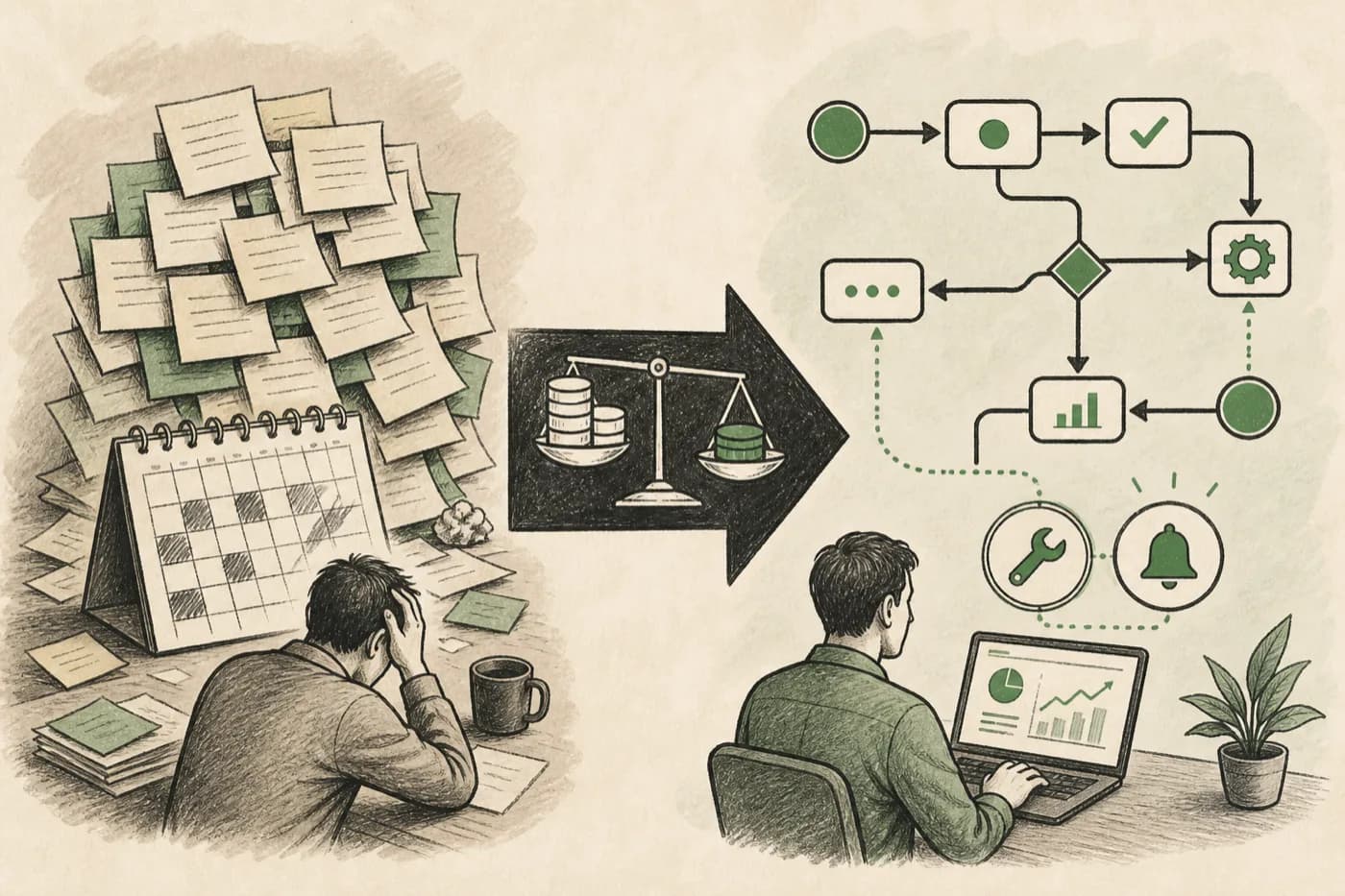
Why the stakes are higher than a tidy canvas
McKinsey's work on generative AI and automation estimates that today's technologies could automate activities that absorb 60–70% of employees' time (The economic potential of generative AI). That is potential, not a mandate to automate everything tomorrow. It is a reminder that the addressable surface is huge, and that teams who automate without ownership create a second full-time job called "feeding the workflows."
In delivery work we use a blunt bench when scoping a first n8n path:
| Signal | Keep manual for now | Worth designing an automation |
|---|---|---|
| Repeats | < ~5 times / week | Daily or multi-daily same path |
| Human time | < ~1 hour / week burned | ≥ ~3–5 hours / week on the same handoff |
| Error blast radius | Money, customer trust, irreversible writes | Low-stakes routing / enrichment |
| Contract | No API or competing sources of truth | One authoritative system + stable API |
Those thresholds are operating heuristics, not laws. They exist so "we could automate this" does not become "we must."
What you are really buying
An n8n workflow is not free once it leaves the editor. You are buying:
- Ongoing attention when APIs change, tokens expire, or a vendor renames a field
- A failure surface: partial runs, duplicate side effects, silent skips
- An ownership seat: who gets paged, who can edit prod, who documents rollback
Manual work has a cost too. Spreadsheets and Slack reminders burn hours and introduce human error. The right move is whichever path has the lower *total* cost for the risk you actually carry, not whichever path feels more modern in a demo.
A four-part filter before you open the canvas
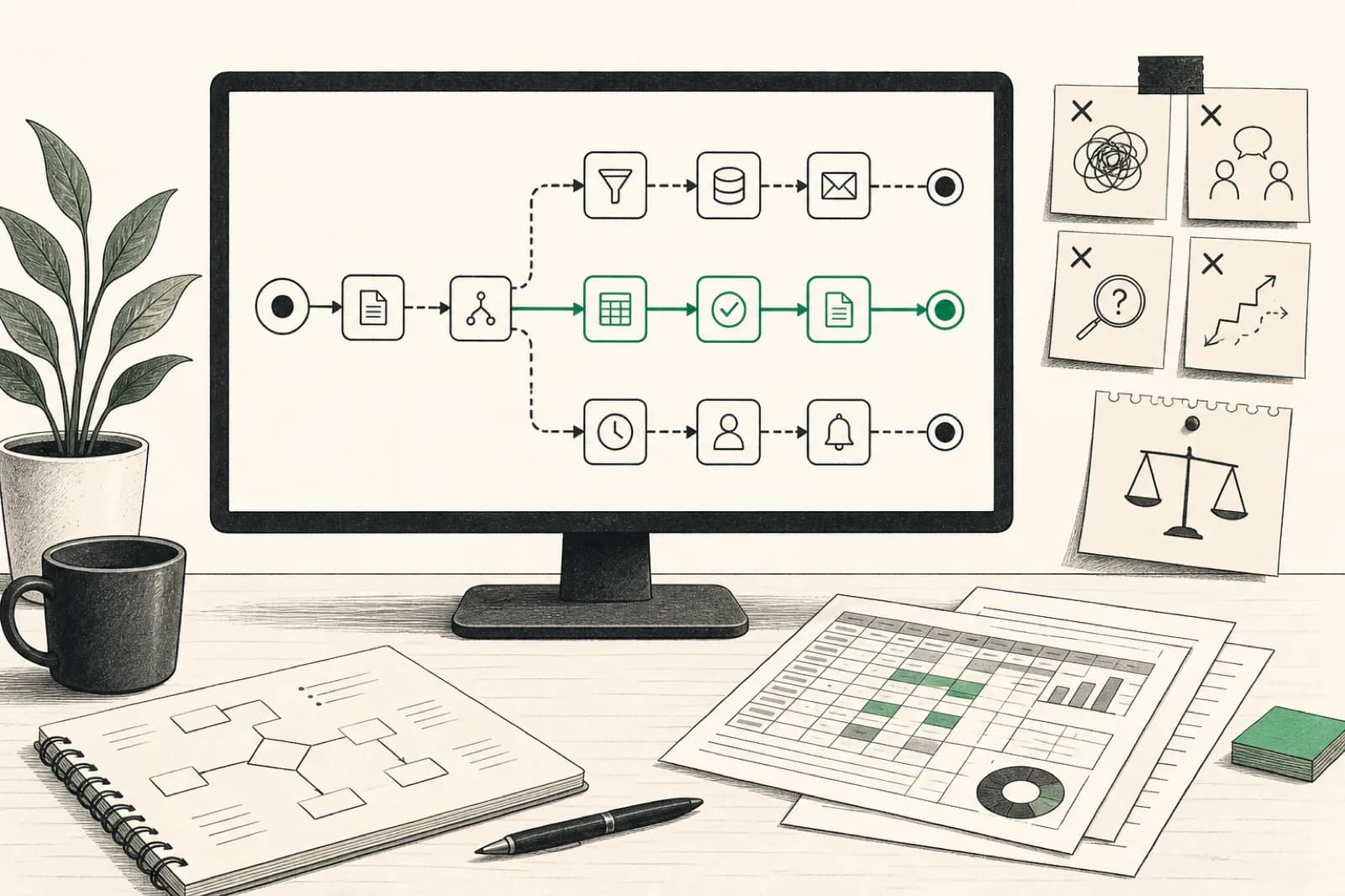
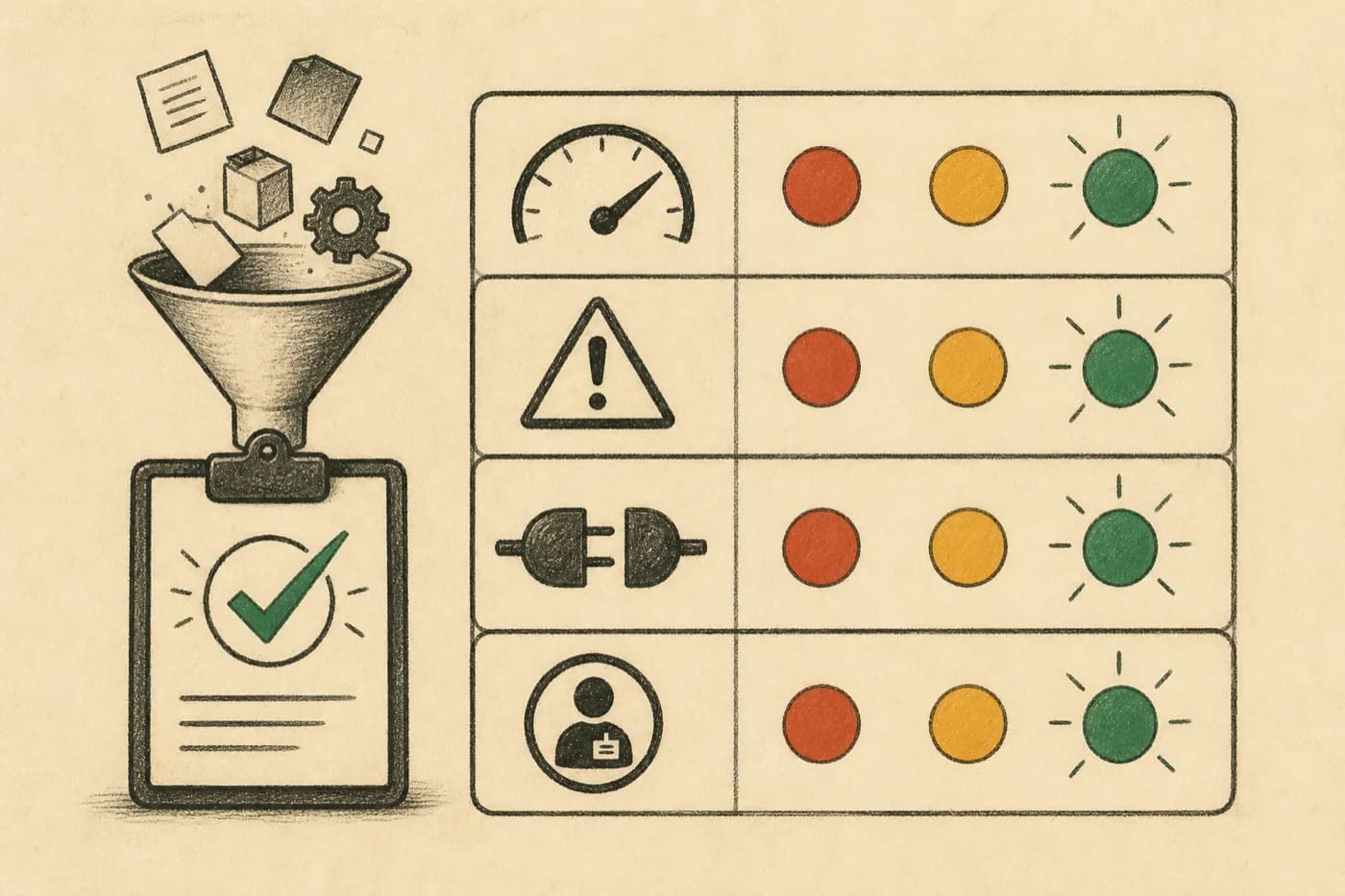
Score each candidate handoff. If two or more answers are weak, keep the spreadsheet for now.
Four-part automate filter
Volume
< 5× / weekDaily+ same path
Error cost
Irreversible / moneyLow-stakes routing
API / SoT
Sheets + tribal loreStable API + owner field
Owner
“Whoever built it”Named primary + backup
Insight: if two or more axes sit on the weak side, keep the spreadsheet. Automate after the foundation clears, not before.
1. Volume and repetition
Worth automating when the same path runs often enough that a human is a bottleneck, not a judgment layer. Weekly invoice status syncs, lead routing from form to CRM, alert fan-out from monitoring to the right channel: good candidates. A founder doing a one-off data cleanup once a quarter: usually not.
2. Error cost
Ask what happens when the automation is wrong or runs twice. Routing an internal lead to the wrong owner is annoying. Charging a customer twice, sending the wrong contract, or mutating production inventory without a guardrail is expensive. High error cost does not forbid automation; it demands checkpoints and idempotency before go-live.
3. Source of truth and APIs
n8n thrives when systems expose stable APIs and one system is clearly authoritative for each field. It fails when the "source of truth" is a shared Drive folder with three conflicting sheets and tribal knowledge in Slack. Fix the contract first. Automation on ambiguity just ships confusion faster.
4. Named owner
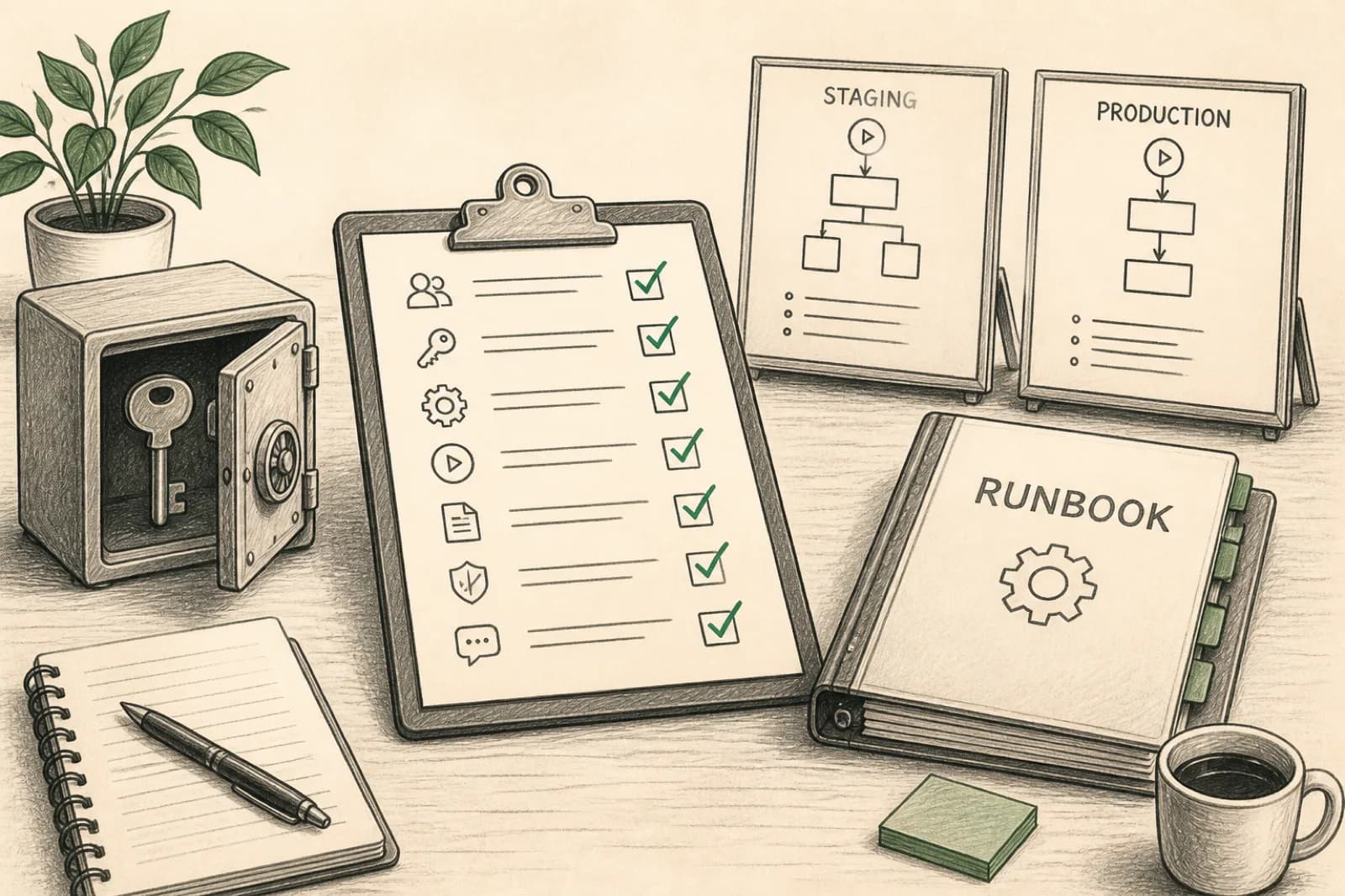
Who owns the runbook after the builder leaves the chat? If the answer is "whoever built the demo," do not promote it to production. Ownership is the theme of the last essay in this series: who owns the n8n instance after the demo.
Good first candidates
These patterns tend to clear the filter early:
- Lead and form routing into CRM or a queue, with clear field mapping
- Status sync between billing, support, and a dashboard, when one system is authoritative
- Alert fan-out from monitoring or uptime tools to the right Slack/Teams channel with deduplication
- CRM hygiene jobs that enrich or flag stale records on a schedule, without inventing new customer-facing behavior
Each of these is glue. The product experience still lives in the systems of record.
Bad first candidates
Park these until the underlying problem is clearer:
- Workflows that encode one-off executive judgment ("decide if this deal is strategic")
- Paths with no API and brittle UI scraping as the only option
- Core product UX that customers experience as the product (checkout, permissions, primary data model)
- Anything where nobody can name the rollback in one sentence
Automate the glue, not the product
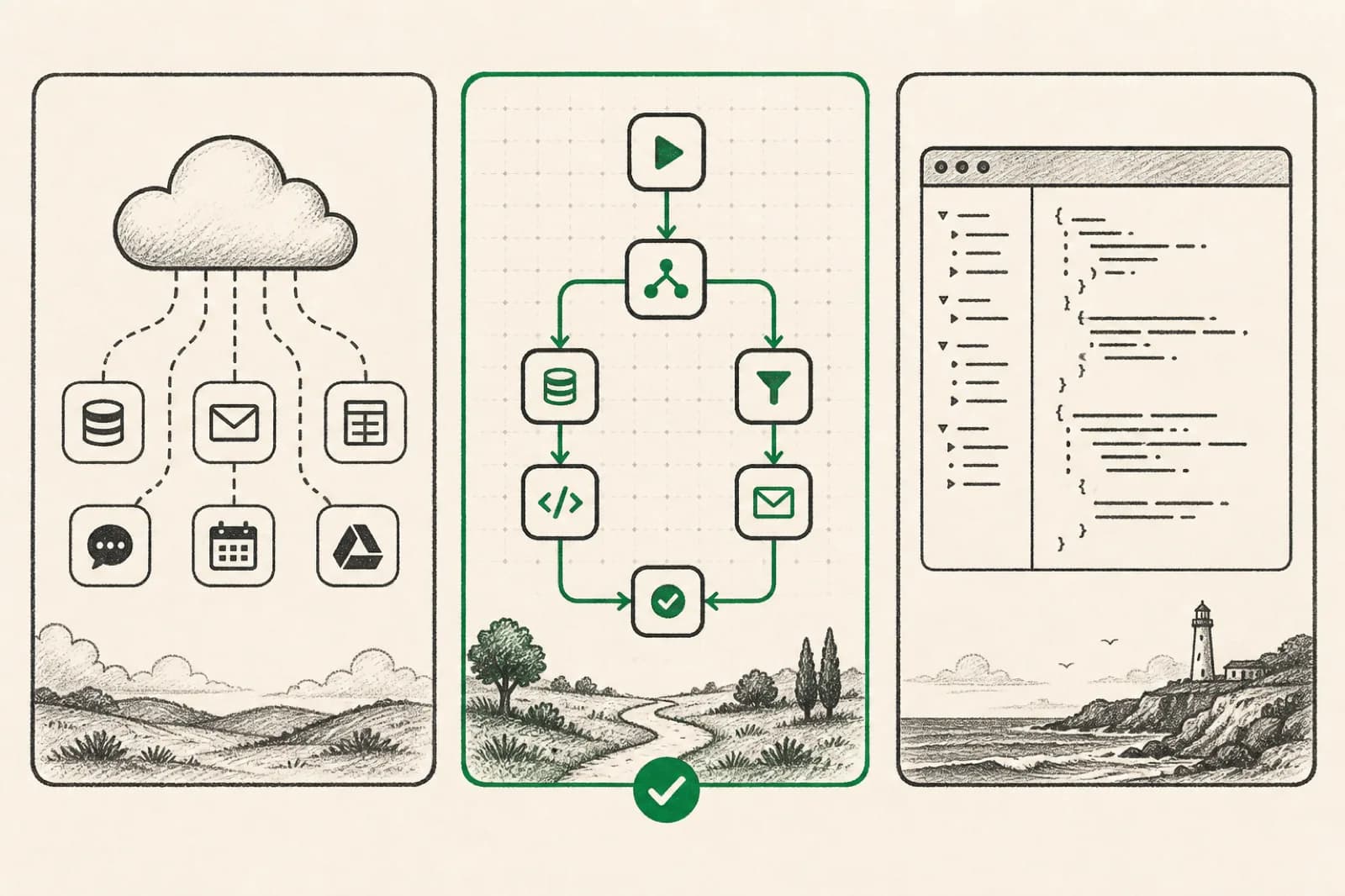
A useful rule of thumb: if the workflow *is* the product, build it in product code with tests, observability, and a release process. If the workflow *connects* products your team already runs, a tool like n8n can be the right runtime, especially when self-hosting and credentials matter. We unpack that choice in n8n vs Zapier vs custom code.
The same discipline shows up in AI work. Teams that bolt unbounded agents onto every process confuse demos with delivery. Bounded workflows with permissions beat theater; we make that case for models in agentic AI: workflow, not chatbot theater, and the production essay in this series applies the same idea to n8n.
A simple decision table
| Signal | Prefer manual / spreadsheet | Prefer n8n (or similar) | Prefer product code |
|---|---|---|---|
| Runs rarely, high judgment | Yes | No | No |
| Repetitive glue across APIs | Maybe | Yes | Sometimes later |
| Customer-facing core path | No | Risky | Yes |
| Unclear source of truth | Fix data first | No | No |
| No named owner | Do not automate yet | Do not automate yet | Do not ship yet |
What to do next
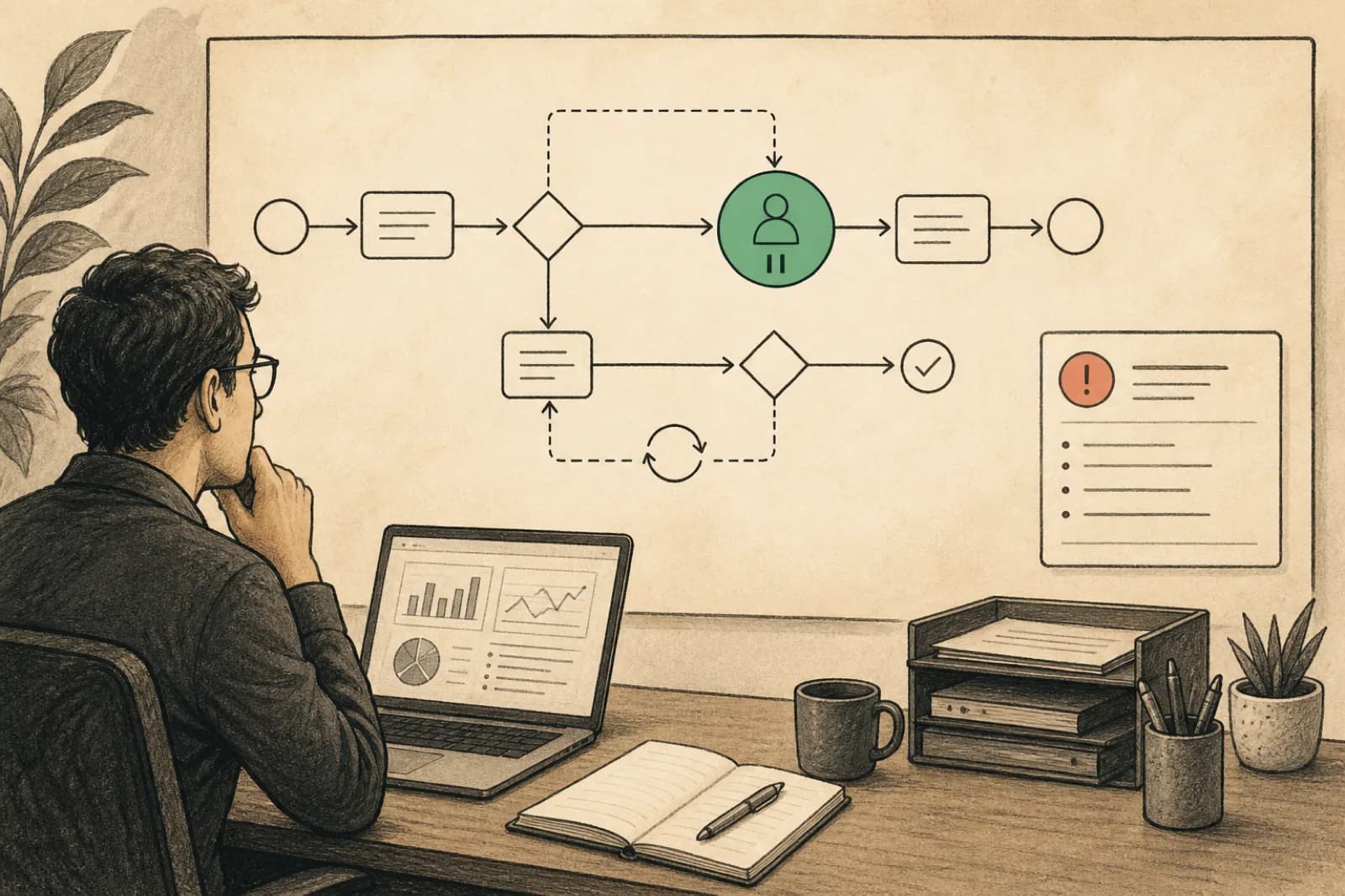
Pick one handoff that clears the four-part filter. Write the happy path, the failure path, and the owner in a short doc *before* building nodes. Then choose the runtime deliberately, and only then open the editor.
If you are mapping automation against delivery capacity or QA around the edges of a product, see how we work or explore QA and automation as part of a broader delivery plan.